Dubai Insurance Unveils Crypto Wallet for Premiums and Claims
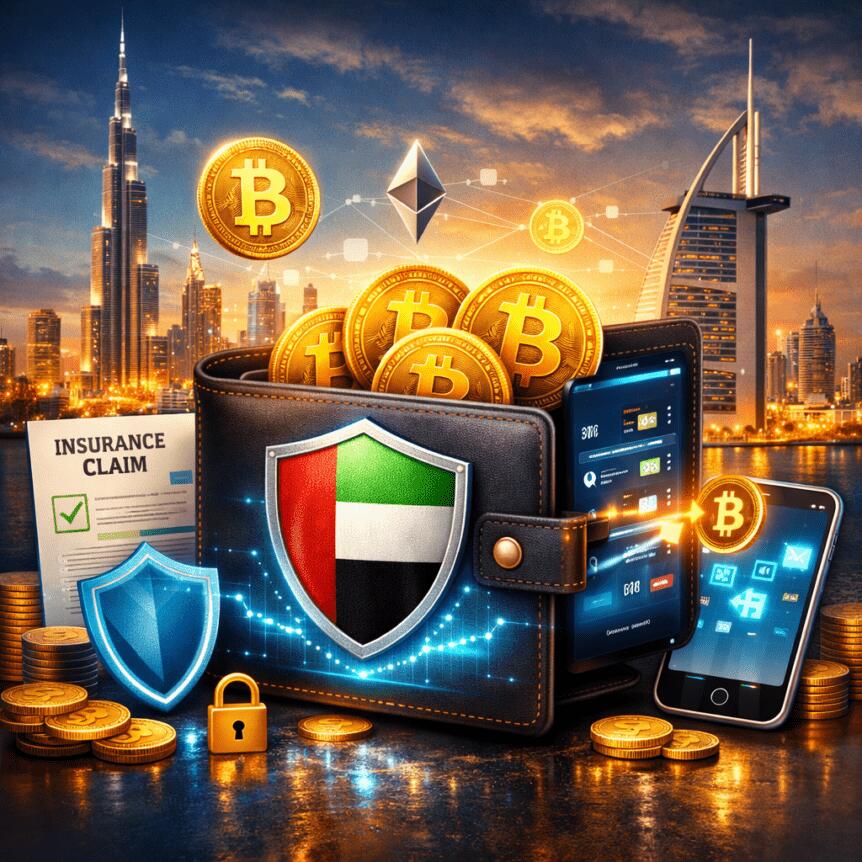 Dubai Insurance has unveiled a crypto-enabled digital wallet that allows policyholders to pay premiums and receive settlements in digital assets. Built on institutional custody infrastructure provided by Zodia Custody, the wallet is designed to operate within the United Arab Emirates’ regulatory framework and is described by the insurer as the first offering of its kind [...]
Dubai Insurance has unveiled a crypto-enabled digital wallet that allows policyholders to pay premiums and receive settlements in digital assets. Built on institutional custody infrastructure provided by Zodia Custody, the wallet is designed to operate within the United Arab Emirates’ regulatory framework and is described by the insurer as the first offering of its kind in the UAE’s insurance sector. Dubai Insurance, founded in 1970, provides general and life coverage across the UAE, and the move reflects a growing interest among insurers in embedding crypto capabilities into payments and claims processes.
Key takeaways
Dubai Insurance’s new wallet is built on Zodia Custody’s institutional custody infrastructure and supports crypto-based premium payments and claim settlements.
The product operates within UAE regulatory and compliance frameworks and is described as the first such offering in the country’s insurance sector.
Dubai Insurance did not disclose which digital assets will be supported at launch or whether the wallet will cover all products.
The move fits into a broader insurance industry pattern of experimenting with digital assets in payments, investments and regulatory frameworks, with life insurers pursuing Bitcoin-denominated products in separate ventures.
Industry observers highlight the need for trusted infrastructure as digital asset adoption accelerates, with executives from Zodia Custody emphasizing the importance of custody and compliance.
Market context: The Dubai Insurance announcement sits within a wider push by regional regulators and insurers to explore digital assets, payments and crypto infrastructure in a tightly regulated environment. It mirrors global trends where insurers test crypto exposures and crypto-native products under custody and risk controls, as markets weigh liquidity and risk sentiment.
Why it matters
For policyholders, the wallet could streamline premium payments and settlements by enabling on-chain transactions within a regulated framework, potentially reducing friction for crypto-enabled financial activities. For the broader insurance sector, the project signals a testing ground for crypto-enabled products that must balance regulatory expectations with product innovation, potentially broadening access to crypto-linked financial services. For the UAE, the initiative contributes to a regional push to formalize crypto-friendly products within a regulated financial-services landscape, with authorities weighing governance, custody standards and consumer protections as crypto adoption accelerates.
What to watch next
Clarification on the specific assets supported at launch and any timelines for rolling the wallet out across other product lines.
Regulatory updates from UAE authorities regarding custody, anti-money-laundering controls and consumer protections for crypto-enabled policies.
Public statements from Dubai Insurance or Zodia Custody about deployment milestones, scaling plans and geographic expansion.
Broader insurer collaborations in the region exploring crypto payments, tokenized products or crypto-backed investment options.
Sources & verification
Dubai Insurance wallet announcement and related commentary on UAE crypto adoption in the insurance sector.
Zodia Custody’s institutional custody involvement and executive remarks about infrastructure for insurers.
Meanwhile’s funding round article linking to Bitcoin-denominated insurance and savings products.
Hong Kong Insurance Authority’s risk-based capital regime discussion and potential crypto exposure rules.
Delaware Life Insurance Company’s Bitcoin-linked exposure tied to a BlackRock index.
Dubai Insurance tests crypto-enabled wallet as UAE insurers explore asset-enabled services
Dubai Insurance has introduced a digital wallet that supports premium payments and settlements in digital assets, leveraging Zodia Custody’s institutional-grade custody framework to provide a compliant pathway for crypto transactions within everyday policy dealings. The insurer emphasizes that the wallet will operate within the UAE’s regulatory and compliance landscape, positioning it as a pioneer in the country’s insurance sector. Dubai Insurance, which has offered general and life coverage since 1970, envisions the wallet as a testbed to modernize how customers interact with crypto-enabled financial products. At this stage, the company has not disclosed the specific assets that will be supported at launch, nor has it confirmed whether the wallet will be integrated across all product lines.
Industry observers note that the launch aligns with a broader trend of insurers experimenting with digital assets across payments, investments and governance. Zodia Custody’s Zane Suren underscored the importance of secure, regulated infrastructure as more policyholders seek to transact with digital assets with confidence. The UAE’s approach to integrating crypto services within a familiar financial-services framework is being watched closely by peers across the region, where regulators are calibrating risk controls while encouraging fintech-enabled innovation.
Dubai Insurance has a long history in the market, offering both general and life insurance products across the UAE. The wallet initiative is being framed as a foundational step in a broader strategy to digitalize policy interactions and diversify the ways customers engage with financial products. The move also sits alongside broader regional experiments with digital-assets-related products and regulatory pilots. For example, in October, Meanwhile raised $82 million in a funding round to expand its Bitcoin-denominated insurance and savings offerings, illustrating a growing appetite among insurers to incorporate crypto into their core offerings. In related regulatory developments, the Hong Kong Insurance Authority began reviewing changes to its risk-based capital regime that could permit insurers to allocate capital to crypto holdings and related infrastructure, though assets would carry a 100% risk charge under the plan. read more on the plan.
Additionally, the market has seen traditional players experiment with crypto-linked exposures. On January 20, Delaware Life Insurance Company announced plans to add limited Bitcoin-linked exposure to its retirement annuity portfolio through a BlackRock index, designed to offer investors indirect exposure to Bitcoin price movements while preserving principal protections within the annuity framework. These examples collectively illustrate a shifting risk tolerance and a willingness among established insurers to test crypto-enabled product features within regulated structures.
This article was originally published as Dubai Insurance Unveils Crypto Wallet for Premiums and Claims on Crypto Breaking News – your trusted source for crypto news, Bitcoin news, and blockchain updates.
About the Author


