Crypto ‘Extreme Fear’ Is a Bullish Signal, Santiment Says
 Crypto market sentiment has cooled to levels not seen in months, yet several analytics voices argue the downside could set the stage for a recovery. Santiment, a data-focused platform, notes that sentiment data remains one of the few bullish signals in an otherwise cautious environment. In a Friday briefing, the firm highlighted that the prevailing [...]
Crypto market sentiment has cooled to levels not seen in months, yet several analytics voices argue the downside could set the stage for a recovery. Santiment, a data-focused platform, notes that sentiment data remains one of the few bullish signals in an otherwise cautious environment. In a Friday briefing, the firm highlighted that the prevailing mood is tempered by an extreme degree of social negativity, with more bearish commentary than bullish on investor chatter. This paradox—fear on social feeds amid occasional contrarian signals on-chain—forms the backdrop for traders navigating a choppy January.
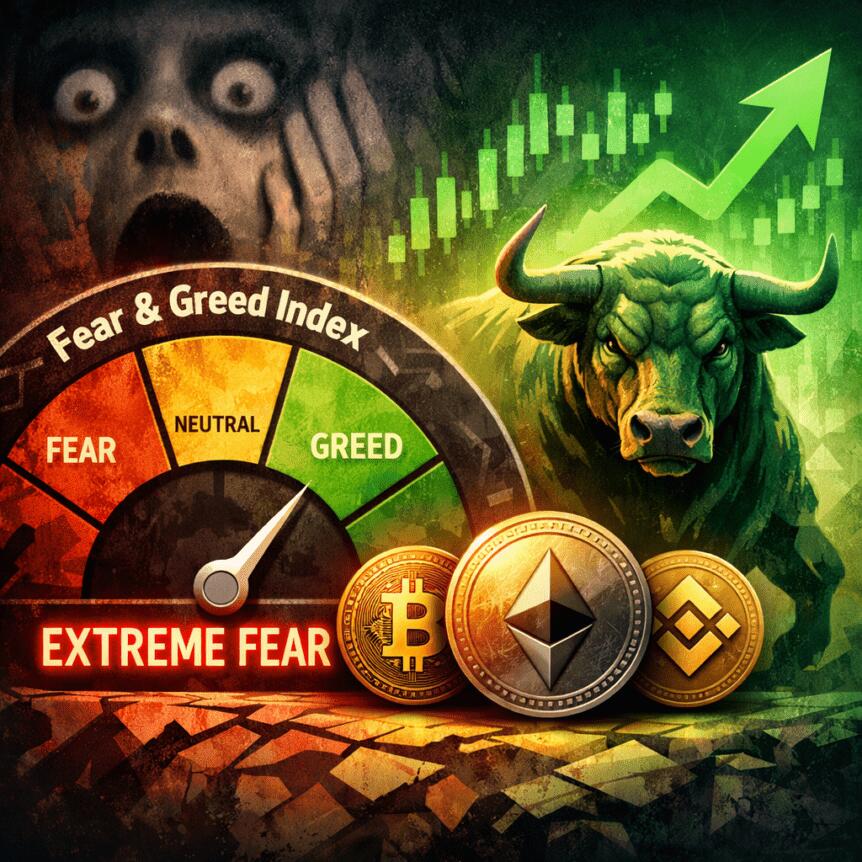
The Crypto Fear & Greed Index, a barometer of broader market psychology, has moved into Extreme Fear territory. It registered a score of 20 on Saturday and 16 on Friday, marking the lowest readings seen in 2026 to date and the first time the index has touched those levels since December. The shift into Extreme Fear underscores a risk-off stance among participants as they weigh macro headwinds, liquidity constraints, and the potential for further downside volatility. On Thursday, the measure briefly slipped back into Extreme Fear after staying in Fear territory since January 20, underscoring how quickly sentiment can shift in a market defined by rapid re-pricing.
Key takeaways
Santiment identifies sentiment data as one of the few potentially bullish signals amid pervasive caution, highlighting a contrarian tilt in the face of widespread fear on social media.
The Fear & Greed Index shows Extreme Fear readings (20 on Saturday, 16 on Friday), marking the period’s nadir so far in 2026.
Bitcoin has fallen roughly 7% over the past seven days, while Ether is down more than 9%, with prices around $83,950 and $2,690 respectively according to CoinMarketCap.
Industry observers point to ongoing mainstreaming efforts—legacy financial players are hiring for crypto-related roles, signaling longer-term support for the sector.
Contrarian voices warn that near-term rotations, such as metals-to-crypto inflows, may not materialize as quickly as some expect, indicating a stubbornly cautious environment.
Tickers mentioned: $BTC, $ETH, $COIN
Sentiment: Bearish
Price impact: Negative. Bitcoin and Ether prices have retreated, reinforcing the risk-off mood surrounding the asset class.
Trading idea (Not Financial Advice): Hold. The near-term path remains uncertain, with mood and macro cues likely to dictate any meaningful directional move.
Market context: Bitcoin has not traded above the $100,000 level since Nov. 13, while Ether has hovered around the $2,690 area. The narrative around the space’s mainstreaming continues, as traditional financial institutions signal growing crypto engagement through hiring and product initiatives.
Why it matters
At first glance, the prevailing fear in the market might seem at odds with any near-term upside. Yet Santiment’s framing suggests that fear can be a precursor to a reversal, particularly when crowd expectations run counter to price action. The logic is not new in crypto markets, which have historically shown contrarian tendencies: when the majority expect prices to fall, liquidity tends to light up for selective buyers, potentially catalyzing a rebound as selling pressure abates and risk appetite returns.
Prices provide grim corroboration of the mood. In the past week, Bitcoin (CRYPTO: BTC) has ceded roughly 7%, and Ether (CRYPTO: ETH) more than 9% as investors recalibrate risk exposure. With BTC hovering around the $83,950 mark and ETH near $2,690, the price action points to a consolidation dynamic that could precede a technical bounce if liquidity returns and macro conditions stabilize. The fact that Bitcoin has not surpassed its psychological ceiling since mid-November adds to questions about whether the market has entered a broader bear phase or is simply digesting prior gains before a renewed push higher.
Beyond price, several industry developments underscore a longer-term revival thesis. Coinbase (NASDAQ: COIN) chief business officer Shan Aggarwal noted in a Friday post that, despite **sentiment being down**, signals are emerging for participants who stay attuned to the changing terrain. Aggarwal pointed to visible momentum from traditional fintech stalwarts expanding into crypto-related offerings, including job postings from MasterCard, PayPal, American Express, and JPMorgan. Such signaling is often cited as a proxy for institutional confidence that the crypto ecosystem is no longer a fringe movement but a growing layer of mainstream finance. In parallel, Bitwise CEO Huntley Horsley argued that the sector is hurtling toward wider adoption, a sentiment echoed by others who believe the market is still in the early innings of a global adoption cycle.
Into this landscape comes a cautionary note from analysts like Benjamin Cowen, who suggested that a broad rotation from precious metals into crypto—an oft-wavored theme in some parts of the market—may not materialize in the near term. His assessment underscores a crucial nuance: even if a portion of capital seeks alternative stores of value, the timing and magnitude of such shifts remain uncertain. The net takeaway is that while macro narratives and institutional engagement provide tailwinds, the near term could stay rangebound or choppy as traders weigh risk, liquidity, and regulatory signals.
In sum, the current moment appears to be a transitional phase rather than a definitive inflection point. The fear embedded in social sentiment and the lack of a clear macro-driven catalyst for a rapid reversal suggest that any upside will likely depend on a combination of technical breakouts, improved liquidity, and tangible steps from institutions and regulators that shift the risk-reward balance back toward conviction.
What to watch next
Bitcoin and Ether price action around key support and resistance levels, particularly any move back toward the $100,000 threshold for BTC.
Updates to the Crypto Fear & Greed Index and shifts in social sentiment, which could precede a change in market velocity.
Public signals from traditional financial players expanding their crypto footprints through hiring, product launches, or partnerships.
Regulatory developments or macro catalysts that could alter risk sentiment and liquidity in the crypto space.
Sources & verification
Santiment’s weekly sentiment report cited in the Friday briefing, including discussion of bullish signals amid overall fear.
Crypto Fear & Greed Index readings showing Extreme Fear scores (20 on Saturday; 16 on Friday).
CoinMarketCap price data for Bitcoin and Ether referenced in the piece (BTC around $83,950; ETH around $2,690).
Shan Aggarwal’s X post discussing sentiment, signals, and institutional engagement.
Industry commentary from Bitwise CEO Huntley Horsley and the broader narrative around legacy financial institutions hiring for crypto roles.
Market sentiment signals a potential rebound as fear lingers
Bitcoin (CRYPTO: BTC) has fallen nearly 7% over the past seven days, while Ether (CRYPTO: ETH) is down more than 9%, with prices reported around $83,950 and $2,690 respectively. The backdrop is a market brimming with fear, yet analysts see a potential setup for a reversal. Santiment framed the current mood as notable for its contrarian implications: a sea of pessimism that, if prices stabilize or trend higher, could catalyze a short-squeeze of sorts as buyers step back in. The firm underscored that the signal is not a guarantee of a rebound, but it is among the few indicators capable of signaling a shift when other metrics are subdued.
The sentiment narrative is complemented by the Fear & Greed Index, which recently oscillated into Extreme Fear. The readings—20 on Saturday and 16 on Friday—represent the lowest levels touched so far in 2026, and the index’s retreat into fear underscores a risk-off posture among traders. While the data suggests caution, it also implies that negative sentiment is highly visible; contrarians may view this as an opportunity should macro conditions improve or liquidity conditions ease. The dynamic has itself become a talking point for market observers who see the psychology of fear as a potential prelude to price stabilization or a rebound, rather than a permanent drift into a deeper bear cycle.
The broader takeaway, as Santiment notes, is historically consistent: markets often move opposite to the crowd’s expectations. When the collective consensus tilts toward lower prices, it can leave pockets of demand underpriced and poised for a snap-back if and when buyers re-emerge. In this frame, the recent price moves are less about a confirmed downtrend and more about a market trading in a wait-and-see mode as participants assess liquidity, macro cues, and evolving narrative around crypto’s mainstream adoption.
Industry voices reinforce the idea that sentiment alone is not destiny. Aggarwal’s post highlighted a parallel trend: despite subdued sentiment, the industry is gradually rebuilding a bridge to conventional finance. The emphasis on hiring by major players—MasterCard, PayPal, Amex, and JPMorgan—suggests that the infrastructure for more robust crypto offerings is slowly being assembled. Bitwise’s Horsley echoed the sentiment, emphasizing forward momentum toward broad mainstream acceptance, even if the near term remains a muted phase of adjustment. In this context, the apparent disconnect between social gloom and structural progress could prove pivotal if new product initiatives or partnerships unlock fresh sources of demand.
Analysts who focus on timing argue for caution. Cowen’s commentary warned that a major rotation from traditional stores of value into crypto may not arrive swiftly, challenging any optimistic view that the sector is on the cusp of a rapid, metals-to-crypto migration. The reconciled view is nuanced: while enthusiasm about crypto’s long-term potential persists, the near-term performance is likely to be dictated by how quickly institutions scale up exposure, how regulators respond to evolving market dynamics, and how investors interpret the mix of risk, liquidity, and macro momentum. As a result, investors may want to adopt a patient stance, ready to seize risk-off relief rallies if and when sentiment shows signs of reversing and price structures begin to probe new highs.
In sum, the current narrative frames a delicate inflection point. The fear embedded in social media, combined with a handful of constructive signals from analytics firms and a broader shift toward institutional involvement, suggests that the market could remain range-bound in the near term. The path to a sustained rebound will likely hinge on a confluence of technical breakouts, improved liquidity, and tangible macro or regulatory catalysts that reframe the risk-reward calculus for risk assets in the crypto space.
https://platform.twitter.com/widgets.js
This article was originally published as Crypto ‘Extreme Fear’ Is a Bullish Signal, Santiment Says on Crypto Breaking News – your trusted source for crypto news, Bitcoin news, and blockchain updates.
About the Author


