Trump Expected to Sign Bill Ending Partial US Government Shutdown
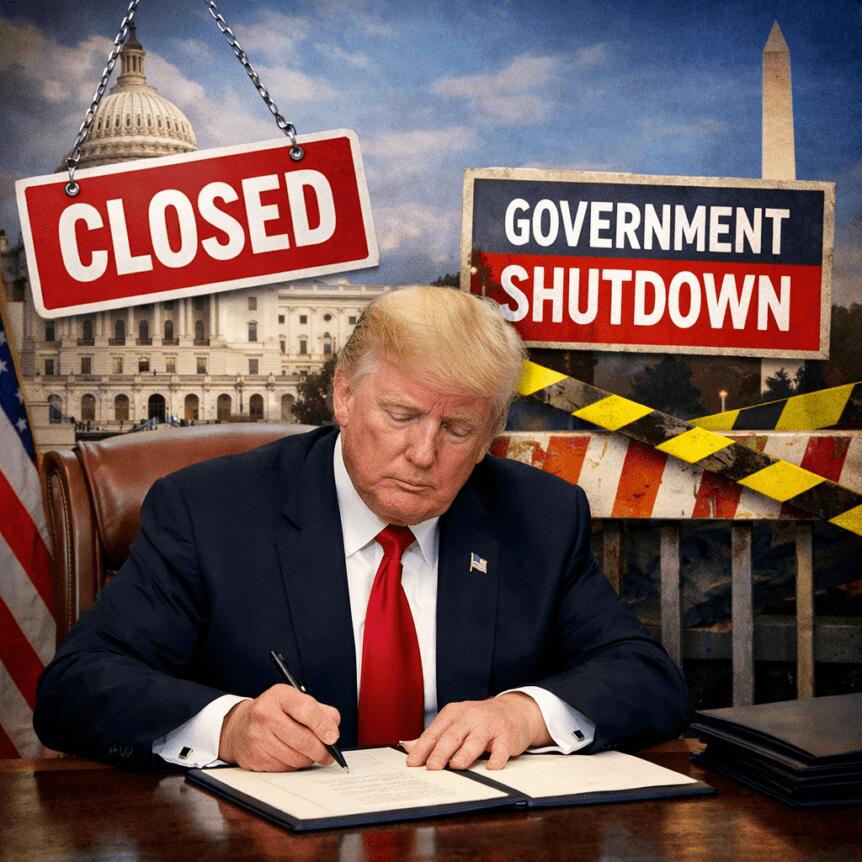 In a bid to quell a brief government standstill, the US House of Representatives approved a funding package designed to keep most federal operations financed through September 30. The roughly $1.2 trillion measure, already cleared by the Senate, passed 217 to 214, with Democrats offering support despite objections tied to immigration enforcement provisions. The legislation [...]
In a bid to quell a brief government standstill, the US House of Representatives approved a funding package designed to keep most federal operations financed through September 30. The roughly $1.2 trillion measure, already cleared by the Senate, passed 217 to 214, with Democrats offering support despite objections tied to immigration enforcement provisions. The legislation would fund the Department of Homeland Security for only two weeks, after which lawmakers would resume negotiations surrounding Immigration and Customs Enforcement (ICE) and the Border Patrol. The president is expected to sign the bill provided there are no substantive changes to the Senate’s text, marking a temporary end to a four-day partial shutdown that underscored the political fault lines around fiscal policy and border security.
Key takeaways
The House approved the roughly $1.2 trillion funding package by a 217-214 vote, delivering funds to keep most federal operations running through the end of September, pending Senate concurrence on a final path forward.
Homeland Security funding is set for a two-week window, after which lawmakers will resume debate on immigration enforcement measures as part of broader border policy negotiations.
Bitcoin rose about 2% on the news, trading near $74,620, as markets priced in the near-term clarity on fiscal policy and the potential regulatory environment for digital assets.
The Senate remains active on crypto policy, with the Agriculture Committee approving a digital asset market structure bill on party-line votes, while the Banking Committee’s markup faced postponement amid industry pushback and public statements from Coinbase’s leadership.
The resolution of funding will likely unlock the January jobs data, which had been delayed by the shutdown and could influence policy direction and market expectations.
Tickers mentioned: $BTC
Sentiment: Bullish
Price impact: Positive. Bitcoin price moved higher following news of the funding bill passing the House, indicating a brief appetite for relief-driven risk-on trading.
Trading idea (Not Financial Advice): Hold. Short-term liquidity events and evolving regulatory signals suggest caution before committing to larger exposure, but near-term relief from the funding deal supports a constructive tone for select assets.
Market context: The political resolution reduces near-term uncertainty around government funding, while ongoing policy debates in Congress—particularly around crypto market structure and stablecoins—continue to shape risk sentiment and liquidity in digital asset markets amid broader macro considerations.
Why it matters
The funding package’s passage in the House is a tactical step toward stabilizing federal operations and avoiding a broader fiscal shock, even as lawmakers prepare to resume negotiations on immigration policy. For the crypto market, the development comes at a moment when the legislative agenda in Washington is shifting from spending approvals to structured regulation. The digital asset market structure bill, a centerpiece of ongoing crypto legislation, has progressed in the Senate Agriculture Committee, signaling that Congress remains deeply engaged with how crypto markets are governed, traded, and supervised. However, the Banking Committee’s markup on the SEC-related provisions has been paused amid industry concerns and public remarks from major players such as Coinbase, highlighting the sector’s sensitive balance between innovation and oversight.
The immediate market reaction—an uptick in Bitcoin (Bitcoin (CRYPTO: BTC))—reflects a combination of relief that government funding will continue and a neutral-to-positive read on the regulatory horizon. While the price move was modest, it underlines how macro fiscal developments can bleed into crypto sentiment, even as traders weigh potential shifts in custody, exchange rules, and stablecoin policy. The broader context remains one of ongoing regulatory scrutiny, ETF discussions, and potential macro data revisions, all of which can influence liquidity and risk appetite in digital assets.
As lawmakers outline the next steps, investors will be watching two converging narratives: how the immigration and border policy debate evolves in the near term, and how crypto-specific legislation progresses through both chambers. The outcome could affect not only trading dynamics but also institutional engagement, funding flows, and the pace at which new digital-asset products enter the market. In short, the funding resolution provides temporary clarity, while the real test for markets may come from the detailed policy language surrounding crypto assets and the potential timing of regulatory milestones.
Magazine: The critical reason you should never ask ChatGPT for legal advice
Lawmakers to continue negotiations on immigration policy as the funding framework proceeds through Congress.
The January jobs report, delayed by the shutdown, is expected to be released once funding advances, potentially shifting macro expectations.
Crypto market-structure legislation faces continued discussion in the Senate, with industry feedback and stakeholder positions shaping the text before final votes.
Regulatory conversations around stablecoins and crypto governance remain a focal point, with official briefings and meetings impacting policy signals.
Liquidity and risk sentiment in digital assets will hinge on ETF developments, macro indicators, and the trajectory of regulatory clarity.
What to watch next
Follow whether the House and Senate reach a longer-term funding agreement that extends beyond September and addresses immigration policy in a comprehensive way.
Monitor the release timing and contents of the January jobs report, which could influence expectations for monetary policy and market risk appetite.
Observe the Senate’s ongoing work on the digital asset market structure bill, including any amendments and the response from industry participants.
Track regulatory updates on stablecoins and crypto governance following White House discussions with crypto and banking representatives.
Sources & verification
U.S. House vote tally and bill details available via the House of Representatives coverage: https://live.house.gov/
Senate passage of the funding package and related discussions on fiscal policy and immigration enforcement.
Bitcoin price movement around the funding news, with BTC trading near $74,620 following the House vote.
White House discussions with crypto and banking representatives on stablecoins and policy directions (linked coverage).
January jobs report timing and delay due to the partial government shutdown (CNBC reporting).
Senate Agriculture Committee’s market-structure bill vote and related industry commentary, including notable positions from Coinbase.
What to watch next: quick checks
Expected rescheduling of Senate Banking Committee actions on crypto provisions and the timing of any markup in the near term.
Any new statements from the White House on crypto policy and stablecoins following bipartisan briefings.
Concrete dates for the anticipated January jobs report release and any revisions to government data calendars.
Updates on immigration policy negotiations and any broader fiscal agreement that could influence market sentiment.
Rewritten Article Body
The House’s approval of the funding package marks a pragmatic step toward stabilizing federal operations after a four-day shutdown, even as lawmakers acknowledge that the underlying friction around immigration policy remains unresolved. The legislation, a roughly $1.2 trillion package that had already cleared the Senate, secures funding through the end of September 30 and narrowly squeezed through a partisan gauntlet with a 217-214 vote. While some Democrats supported the measure, their backing hinged on the bill’s immigration provisions, reflecting the enduring tension between fiscal prudence and border-security policy. The immediate practical effect is to restore many government functions and avoid a deeper fiscal disruption, but the agreement comes with a built-in arc of ongoing debate on how enforcement should operate in practice.
Central to the political dynamic is Homeland Security, which will receive funding for only two weeks under the bill. This deliberate cliff provides lawmakers with a predictable pause to revisit policy details surrounding ICE and the Border Patrol. In practical terms, the two-week window is a reminder that the federal budget process remains a battlefield where timing matters as much as totals. The White House is positioned to sign the measure, provided the executive text remains faithful to the Senate version, lending a sense of near-term continuity even as committees gear up for fresh discussions about immigration enforcement. The quick turn from shutdown to funding underscores how quickly political theater can pivot toward policy battles that carry far-reaching implications for regulatory environments and market expectations.
Against this political backdrop, markets responded with a modest risk-on tilt. Bitcoin rose about 2% on the news, trading near the $74,620 mark, a sign that traders read the development as a degree of macro clarity in an otherwise uncertain policy landscape. The price action is not a guarantee of longer-term trend, but it illustrates how fiscal stability and policy signaling can feed into the crypto market’s short-term dynamics. In a space where regulatory news frequently outruns price action, even a temporary resolution of a funding dispute can provide a breathing space for investors weighing the trajectory of digital-asset governance and market structure reforms.
Beyond the funding vote, the legislative path for crypto policy continues to be a central theme in Washington. The Senate Agriculture Committee’s vote to pass a digital asset market structure bill—though party-line—signals that Congress remains determined to tackle the regulatory architecture surrounding crypto markets. At the same time, the Banking Committee’s markup on the section addressing the Securities and Exchange Commission has been postponed after Coinbase CEO Brian Armstrong signaled reservations about the bill as written. The dialog between lawmakers and industry players indicates a delicate balance: policymakers seek guardrails that protect investors and preserve market integrity, while market participants push for clarity that encourages innovation and liquidity. The resulting policy language, once ironed out, could shape the way exchanges operate, how stablecoins are regulated, and how new crypto products are brought to market.
Meanwhile, the political clock continues to tick on other interlocking pieces of the macro puzzle. With the shutdown ending, attention will quickly shift to the January jobs data, which was delayed due to the partial government closure. The report’s release could inject fresh data into the policy calculus around monetary stance and risk appetite. In parallel, White House officials have engaged with crypto and banking representatives to discuss stablecoins and broader digital-asset policy, signaling that the administration views regulatory clarity as a central governance objective. Those conversations, coupled with ongoing ETF considerations and the evolving posture of U.S. regulators, keep the sector in a heightened state of vigilance, where the next data point or policy announcement can swing sentiment as swiftly as a single tweet or statement from a key committee chair.
In sum, the immediate political milestone of funding the government through September provides short-term relief and a platform for more work. Yet the broader crypto-policy trajectory remains unsettled, with the Senate’s market-structure bill and the Banking Committee’s discussions likely to define the market’s operating environment in the months ahead. Market participants should watch for how immigration negotiations influence fiscal calendars, how the January jobs data informs policy expectations, and how White House–level discussions translate into concrete regulatory actions—factors that will continue to drive liquidity, volatility, and institutional interest in crypto markets.
This article was originally published as Trump Expected to Sign Bill Ending Partial US Government Shutdown on Crypto Breaking News – your trusted source for crypto news, Bitcoin news, and blockchain updates.
About the Author


