Ripple CEO Confirms White House Meeting With Crypto and Banking Reps
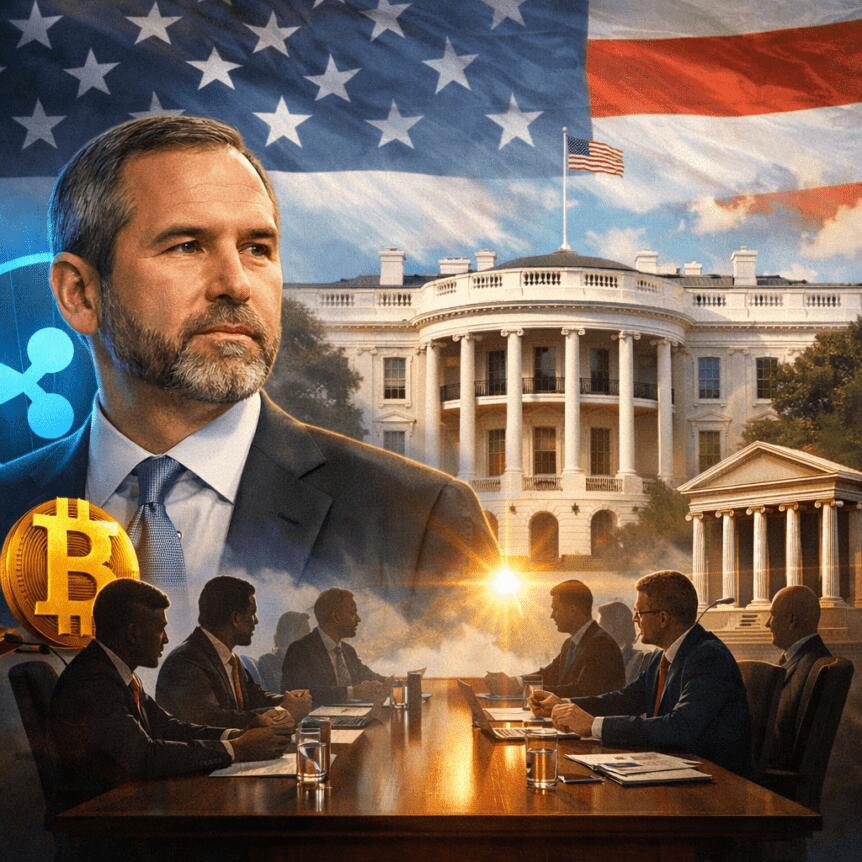 Washington’s ongoing push to align crypto policy with traditional finance took another step as White House officials hosted a second meeting with industry representatives and banking executives to refine a proposed market-structure bill in the U.S. Senate. The talks, aimed at narrowing gaps on stablecoin yields and other guardrails, arrive amid broader efforts to reconcile [...]
Washington’s ongoing push to align crypto policy with traditional finance took another step as White House officials hosted a second meeting with industry representatives and banking executives to refine a proposed market-structure bill in the U.S. Senate. The talks, aimed at narrowing gaps on stablecoin yields and other guardrails, arrive amid broader efforts to reconcile consumer protections with U.S. competitiveness in crypto innovation. In a Thursday Fox News appearance, Ripple (the company) CEO Brad Garlinghouse said his company’s chief legal officer, Stuart Alderoty, joined White House officials at the discussions earlier in the day. The remarks followed unconfirmed reports that the administration would push ahead with the CLARITY Act, a framework designed to establish a market structure for digital assets, though no deal was announced at the time of reporting. The evolving dialogue underscores the delicate balance lawmakers seek between enabling financial innovation and safeguarding taxpayers and markets.
Key takeaways
White House discussions with crypto and banking representatives continue as lawmakers weigh stablecoin yield provisions and market-structure safeguards.
Ripple’s leadership participated in the talks, signaling high-level interest from the sector in shaping policy deliberations.
The CLARITY Act remains a focal point in Congress, having passed the House earlier in the year but facing delays in the Senate and ongoing committee scrutiny.
Coinbase (EXCHANGE: COIN) CEO Brian Armstrong has publicly challenged certain provisions, arguing they could curb the regulatory role of the CFTC in favor of the SEC and raise concerns about tokenized equities.
Crypto policy advocates described the White House meeting as constructive and aimed at a framework that preserves American competitiveness while protecting consumers.
Tickers mentioned: $COIN
Sentiment: Neutral
Market context: The discussions sit within a broader regulatory backdrop as lawmakers and agencies navigate the overlap between traditional securities rules and crypto tokens, with market participants watching for signals on how a potential framework may affect liquidity and risk appetite.
Why it matters
The conversations in Washington reflect a policy environment where the United States is attempting to define a national standard for digital assets without stifling innovation. While lawmakers have advanced parts of their market-structure agenda in some committees, others have pressed pause or demanded clarifications. A central tension is how to treat stablecoins and yield mechanisms—areas that could influence capital flows and the attractiveness of the U.S. as a hub for crypto and blockchain experimentation. The involvement of high-profile industry voices, including Ripple’s Alderoty and Coinbase’s Armstrong, signals that the stakeholder community is intent on shaping the legislative design rather than merely reacting to it.
The CLARITY Act has been a cornerstone in this debate. Passed by the House but hampered by delays in the Senate and internal concerns about conflicts of interest and the scope of regulation, the bill’s path forward hinges on finding consensus around DeFi rules, tokenized equities, and stablecoin governance. The ongoing discourse also highlights the role of regulators—specifically the CFTC and the SEC—in delineating authority over different asset classes. As policy debates intensify, market participants are weighing how any forthcoming framework could alter trading venues, custody standards, and the treatment of tokenized assets within investor portfolios.
From a market perspective, the immediate impact of policy discussions tends to be less about dramatic price shifts and more about positioning and expectations. Traders monitor committee schedules, public statements by key figures, and any formal markup dates that could signal a near-term stance or a shift in trajectory. The meetings also underscore a broader operational reality: policy clarity is often valued more than policy speed, as clearer rules can reduce regulatory risk and encourage longer-horizon project development in the crypto economy.
What to watch next
Rescheduling and outcome of the Senate Banking Committee markup on digital asset market structure legislation.
Public commentary from White House crypto advisers and other senior policymakers on the CLARITY Act and related regulations.
Further statements from the private sector, including the participation of major exchanges and industry groups, on provisions affecting stablecoins and tokenized equities.
Any new revelations from meetings hosted at high-profile venues (e.g., discussions linked to industry events or forums) about governance and enforcement expectations.
New official documents or filings that detail how the proposed rules might interact with existing CFTC and SEC authorities.
Sources & verification
Congress.gov — Text of the CLARITY Act and details on its legislative timeline.
YouTube — Brad Garlinghouse Fox News interview referencing Alderoty’s attendance at the White House meeting.
Crypto Council for Innovation — Public statements describing the discussions and their constructive tone.
Cointelegraph coverage — Reporting on the Mar-a-Lago forum and related policy discussions, including sentiment from lawmakers.
Market reaction and key details
The White House’s latest round of talks with cryptocurrency and banking representatives illustrates a persistent drive to harmonize digital-asset policy with traditional financial oversight. The aim is to craft a framework that resists regulatory fragmentation while ensuring robust protections for consumers and market integrity. In a Thursday appearance on Fox News, Ripple (the company) CEO Brad Garlinghouse reiterated that Alderoty attended the White House discussions earlier in the day, signaling the depth of the policy engagement from the industry side. The remarks followed media speculation about how the administration would approach the CLARITY Act—the House-approved package designed to regulate digital assets and present a coherent market structure—now navigating Senate committees and potential amendments.
The CLARITY Act’s journey through Congress has been irregular. After passing the House in July, the bill faced a series of delays in the Senate, with lawmakers weighing provisions that would influence conflicts of interest and extend governance for decentralized finance, tokenized equities, and stablecoins. The evolving legislative signal is that the administration seeks to balance innovation with safeguards rather than rushing to a verdict. In this context, the meeting with White House officials, as described by Crypto Council for Innovation chief Ji Hun Kim, was noted as constructive and aimed at building a framework that preserves American consumer welfare while maintaining competitive edge in global crypto markets.
Meanwhile, the broader legislative calendar remains complex. The Senate Agriculture Committee earlier advanced its own version of a digital-asset market-structure bill in January, a development that underscores the multi-committee path such legislation often travels before markup and potential floor votes. Yet opposition from some industry players has complicated the process. Coinbase (EXCHANGE: COIN) CEO Brian Armstrong publicly challenged certain provisions that would cap rewards on stablecoin holdings and warned that the bill risks weakening the CFTC’s role in favor of the SEC. These concerns illustrate a familiar tension in U.S. policy debates: how to allocate regulatory authority without constraining innovation or market functionality.
As policymakers navigate these issues, the policy discourse has also touched on high-profile gatherings. A private forum at Mar-a-Lago, attended by policymakers and industry representatives, added another layer to the conversation around the CLARITY Act’s prospects. Senator Bernie Moreno, present at the event, suggested that the act could reach a point where it could be signed into law by spring, though the legislative reality remains uncertain given the ongoing committee reviews and potential revisions. The episodic nature of such appearances reflects the evolving, often negotiation-heavy, path that digital-asset policy typically follows in Washington.
Overall, the latest round of meetings and public statements suggests a cautious but forward-looking stance from both policymakers and industry participants. The objective appears to be a framework that discourages harmful practices, clarifies regulatory jurisdiction, and supports responsible innovation in crypto markets—without stifling the capital flows that underpin a growing ecosystem. For investors and builders, the near-term takeaway is to monitor committee calendars, regulatory updates, and official statements from the White House and key agencies for hints about the direction of risk management, disclosure requirements, and the scope of oversight that a forthcoming bill could impose.
Interim guidance and verbatim quotes from executive statements will likely continue to influence sentiment, particularly as the Senate Banking Committee and other panels recalibrate their approach to market structure, stablecoins, and tokenized assets. In the interim, the market context remains one of guarded optimism, with careful attention paid to regulatory clarity as much as to any immediate policy actions. The interplay between public policy, industry feedback, and the practical realities of operating in a highly dynamic crypto landscape will continue to shape liquidity conditions and risk sentiment in the months ahead.
Notes from the coverage and the primary sources referenced above should be verified for any updates to committee schedules, official statements, or new voting outcomes as the legislative process evolves.
This article was originally published as Ripple CEO Confirms White House Meeting With Crypto and Banking Reps on Crypto Breaking News – your trusted source for crypto news, Bitcoin news, and blockchain updates.
About the Author


