Hong Kong Regulators to Submit Draft Crypto Framework Bill in 2026
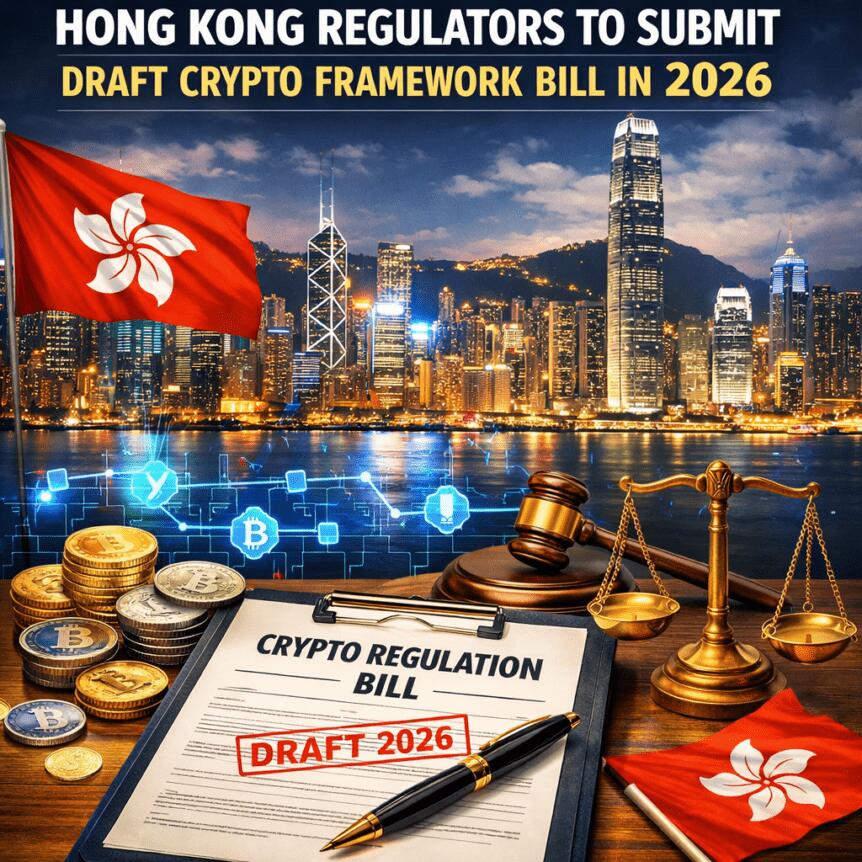 Hong Kong’s regulatory arc for digital assets is moving from consultation to drafting, with officials outlining a concrete timetable for 2026. In remarks prepared for the Legislative Council’s Finance Committee, Secretary for Financial Services and the Treasury Christopher Hui said the Financial Services and the Treasury Bureau and the Securities and Futures Commission plan to [...]
Hong Kong’s regulatory arc for digital assets is moving from consultation to drafting, with officials outlining a concrete timetable for 2026. In remarks prepared for the Legislative Council’s Finance Committee, Secretary for Financial Services and the Treasury Christopher Hui said the Financial Services and the Treasury Bureau and the Securities and Futures Commission plan to submit a draft ordinance this year, aimed at governing providers of crypto advisory services. The comments come after a December digital asset consultation paper, and they signal a broader push to formalize rules around asset- and advisory-related activities while preserving room for innovation. Separately, the Hong Kong Monetary Authority is processing license applications for stablecoin issuers and exploring tax reporting measures tied to the OECD framework—an effort that could tie Hong Kong’s tax transparency to international standards by 2028. The combination of these steps reflects a calibrated approach to crypto regulation in a city intent on balancing risk management with financial innovation.
Key takeaways
The Financial Services and the Treasury Bureau and the SFC are targeting a 2026 submission of a draft ordinance regulating providers offering crypto advisory services, following a December consultation paper.
The HKMA has begun processing license applications for stablecoin issuers, with the regulatory framework established by the Stablecoin Ordinance remaining in force; as of the latest update, no licensed stablecoin issuers appear on the HKMA’s public register.
Hong Kong aims to implement revisions to the OECD crypto-asset reporting framework and common reporting standards, enabling automatic tax-information exchanges with other jurisdictions starting in 2028.
Licensed crypto platforms serving Hong Kong residents stand at 11, reflecting ongoing regulatory scrutiny of exchange activities alongside a broader push for governance guardrails.
U.S. regulatory developments parallel Hong Kong’s maneuvers, as the Senate moves a digital asset market structure bill to clarify the roles of the SEC and CFTC in overseeing crypto markets.
Sentiment: Neutral
Market context: The moves sit within a global tightening of crypto regulation, where jurisdictions seek robust disclosures, consumer protection, and tax transparency while preserving pathways for innovation and financial services competitiveness.
Why it matters
For market participants, Hong Kong’s 2026 draft framework could provide a more predictable regulatory runway for both local and international crypto businesses. The emphasis on advisory services regulation signals a shift toward curbing potentially opaque or misaligned investment guidance, which could reduce consumer risk and bolster institutional confidence. The fact that the HKMA is actively reviewing stablecoin issuances—while noting there are currently no licensed issuers on the public register—offers clarity that the city remains cautious about asset-backed digital currencies and stablecoins tied to the Hong Kong dollar or other assets. This regulatory posture may influence where projects choose to establish or expand operations, particularly those seeking access to Asia-Pacific markets and their liquidity pools.
From a fiscal perspective, the OECD-driven reporting framework seeks to harmonize how crypto transactions are taxed across borders. Hong Kong’s plans to align with common reporting standards and automate cross-border tax information exchanges starting in 2028 positions the city within a broader international regime aimed at preventing tax evasion and improving compliance. The move aligns with similar efforts across major financial hubs and could affect tax planning for individuals and institutions engaged in digital-asset activities, especially those with cross-border activity or complex custody arrangements.
On the ground, the 11 platforms licensed to serve Hong Kong residents indicate a carefully regulated ecosystem for crypto trading and related services. These licenses attest to a broader willingness among public officials to permit regulated access to digital-asset markets, while the absence of licensed stablecoin issuers underscores the city’s measured stance toward stablecoins until the regulatory framework and supervisory capacity are fully in place. Taken together, Hong Kong’s approach looks to strike a balance between safeguarding investors and enabling financial innovation within a transparent, centralized framework.
Meanwhile, in the United States, lawmakers on the Senate Agriculture Committee advanced a market-structure bill for digital assets that aims to delineate the responsibilities of the two principal U.S. financial regulators—the Securities and Exchange Commission and the Commodity Futures Trading Commission. The framework is designed to reduce regulatory ambiguity and elevate risk management standards for a broad array of crypto products, from tokens to exchange-traded constructs, potentially shaping how global firms coordinate their compliance activities across markets.
What to watch next
Submissions of the draft ordinance on crypto advisory services to the Legislative Council in 2026, and any public responses to the policy framework outlined in Hui’s remarks.
The progression of the OECD crypto-asset reporting framework revisions and common reporting standards, including timelines for 2028 automatic information exchanges.
Updates on the HKMA’s licensing landscape for stablecoins and any changes to the public register for stablecoin issuers.
Results from ongoing public consultations and any legislative amendments that address tax reporting or cross-border information sharing.
U.S. regulatory developments around the crypto market structure bill, including passage status and potential implications for cross-border firms operating in Hong Kong.
Sources & verification
Official remarks from Christopher Hui to the Legislative Council Finance Committee and related documents on the Hong Kong government site: info.gov.hk.
December 2025 digital asset consultation paper released by the Financial Services and the Treasury Bureau and related materials: fstb.gov.hk.
Hong Kong Monetary Authority’s register of licensed stablecoin issuers: hkma.gov.hk.
Securities and Futures Commission list of licensed platforms operating for Hong Kong residents: sfc.hk.
U.S. Senate Agriculture Committee discussions and coverage of the digital asset market structure bill (as referenced in contemporaneous reporting).
Hong Kong advances crypto regulation, OECD alignment and lender safety
Hong Kong’s regulatory trajectory for digital assets is evolving along two parallel tracks: harmonizing tax and reporting standards with international norms, and tightening supervisory oversight on asset classes, platforms, and advisory services. The government’s plan to submit a draft ordinance addressing crypto advisory services represents a substantive step toward clarifying the legal duties and liabilities of firms that provide investment guidance in digital assets. The emphasis on advisory regulation acknowledges the growing demand for regulated access to crypto markets while seeking to curb practices that could expose retail investors to unchecked risk.
On the licensing front, the Stablecoin Ordinance remains a central piece of the city’s regulatory architecture. The HKMA has not yet identified any licensed stablecoin issuers on its public register, underscoring a cautious approach to asset-pegged digital currencies until supervisory standards are fully articulated and tested in practice. Concurrently, the city’s approach to tax transparency—anchored in OECD reforms—signals a deliberate alignment with global standards for cross-border information sharing. The timetable envisages exchanges of crypto-asset transaction data with tax authorities abroad starting in 2028, a milestone that could influence how individuals and institutions plan and report digital-asset activity.
For market participants, these developments translate into a more predictable, policy-driven environment. The 11 licensed platforms serving Hong Kong residents show that regulated access to digital-asset trading and related services remains viable, provided operators meet stringent requirements. This level of governance could help attract institutional participation while maintaining safeguards for retail investors. At the same time, the absence of licensed stablecoin issuers signals ongoing prudence in risk assessment and capital requirements before permitting stablecoins to play a more central role in the city’s payments landscape.
In parallel, the U.S. regulatory conversation continues to shape global dynamics. The Senate’s push to clarify the regulatory duties of the SEC and CFTC in overseeing crypto markets adds another layer of context for international firms evaluating where to locate activities, liquidity, and customer protection measures. While the outcomes remain uncertain, the cross-border implication is clear: regulatory convergence and clarity in one major market can influence practices and timelines in others, including Hong Kong’s meticulous, governance-forward approach.
This article was originally published as Hong Kong Regulators to Submit Draft Crypto Framework Bill in 2026 on Crypto Breaking News – your trusted source for crypto news, Bitcoin news, and blockchain updates.
About the Author


