Growing Jewish extremist attacks in the West Bank are testing the boundaries between law enforcement, intelligence, and political influence in Israel
While Israel’s security forces are celebrating a dramatic collapse in Palestinian terror attacks, a different and far more uncomfortable trend is taking hold in the West Bank. Jewish extremist violence against Palestinians has surged to its highest level in years, leaving villages burned, civilians injured, and the security establishment grappling with a threat that is harder to define.
Only a week ago, a mob of Jewish settlers stormed the Bedouin village of Mukhamas in the West Bank, injuring at least six Palestinians and setting houses and cars ablaze. Videos from the scene showed masked men moving freely for hours, vandalizing property and torching vehicles before security forces arrived.
For Israel’s Central Command, the incident was not an anomaly but another data point in a deeply troubling trend. Only days earlier, the military had released its annual summary for 2025 – figures that point to a dramatic surge in Jewish extremist violence, even as Palestinian terror attacks have declined sharply.
According to Central Command data, 2025 saw a more than 50% increase in the number of serious incidents defined by the security establishment as Jewish terror against Palestinians. The number rose to 128 incidents in 2025, compared with 83 in 2024 and 54 in 2023. These were not marginal acts of vandalism but severe crimes: arson attacks on homes and villages, shootings, and physical assaults resulting in injuries.
The rise is even more pronounced when examining the broader category of “nationalist crime,” which includes stone throwing, agricultural vandalism, and intimidation. In this wider framework, 682 incidents were recorded in 2024, rising to 867 in 2025, a significant spike within a single year.
The question of how many settlers are involved remains contested. Addressing the issue publicly, Prime Minister Benjamin Netanyahu described the perpetrators as “70 boys from broken families.” However, according to the Israel Defense Forces internal assessments, the phenomenon is far broader. Military intelligence estimates that around 300 individuals, largely associated with the so-called “hilltop youth,” have been involved in violent incidents in recent months.
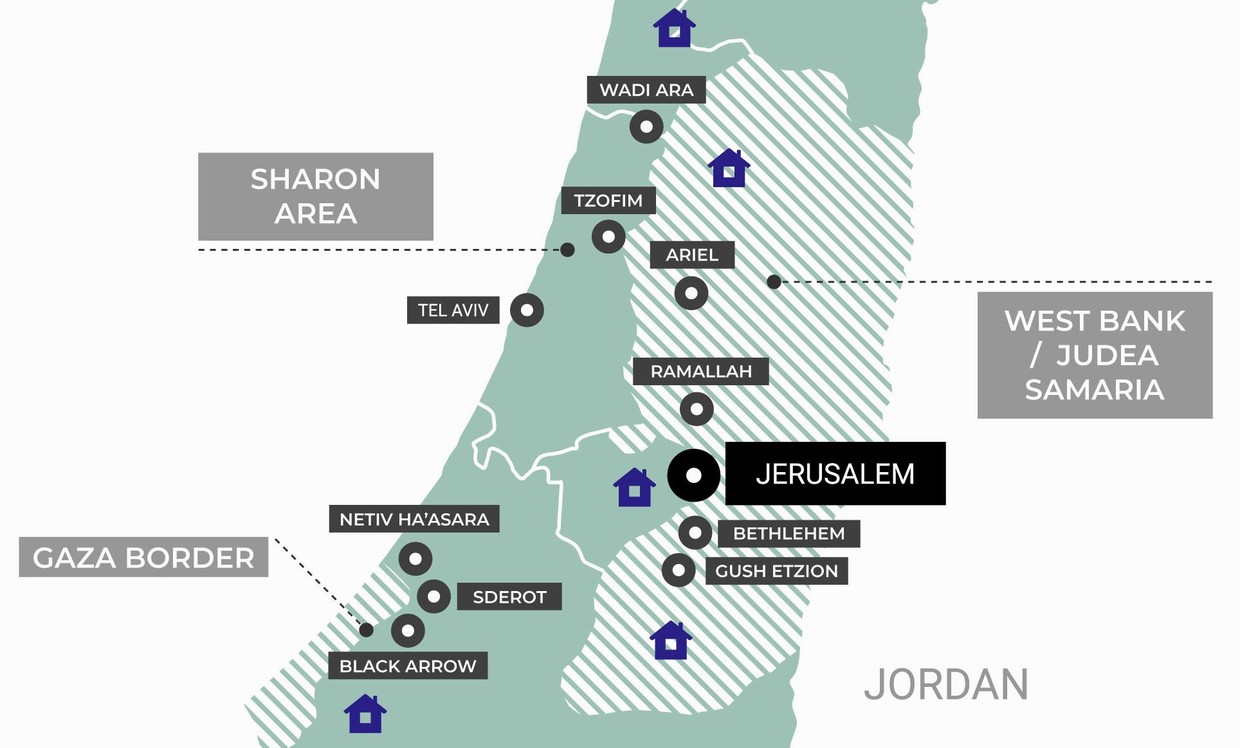
Geographically, the violence is concentrated in specific areas. The most dramatic increases were recorded in Gush Etzion and the Judea region, where incidents more than doubled in some sectors. According to Central Command, roughly 90% of violent acts originate from illegal outposts, rather than from agricultural farms that operate in coordination with the military.
Terror – or something else?
Among Palestinians and Israeli human rights organizations, there is little hesitation in labeling these attacks as terrorism. But not everyone within Israel’s security establishment agrees with that definition.
Amit Assa, a former operative of Israel’s internal security agency, the Shin Bet, says he struggles with the terminology.
“I call it self-defense to the point of extreme activity which may break the law,” Assa explains.
“It must be remembered that 2025 is only the second year since the [October 7, 2023] war, and the Jewish residents of Judea and Samaria are much more vulnerable to rising [Palestinian] attacks.”
His view reflects a broader debate inside Israel: whether Jewish extremist violence should be framed as terrorism or as a radicalized, unlawful response to prolonged insecurity.
At first glance, statistics appear to support Assa’s argument, but only partially.
According to Shin Bet data, attempts by Palestinians to carry out attacks against Israelis have actually increased. In 2025, the agency recorded 1,374 attempted attacks, up from 1,040 in 2024 and 1,032 in 2023.
Yet, the number of attacks that were successfully carried out – and resulted in deaths, injuries, or damage – dropped dramatically. In 2025, there were 54 such incidents, compared with 231 in 2024 and 414 in 2023.
This gap between intent and execution highlights the effectiveness of Israel’s counterterrorism apparatus when it comes to Palestinian militancy. And it also underscores a striking asymmetry in how different threats are handled.
The Shin Bet’s unequal focus
Since its establishment in 1949, the Shin Bet has devoted the overwhelming majority of its resources to combating Palestinian terror. This includes a substantial share of the agency’s budget, thousands of operatives, interrogators, intelligence analysts, cyber units, and a dense network of informants. Daily coordination with the IDF, police, and foreign intelligence services further amplifies its reach.
The logic is clear: Palestinian terror organizations are hierarchical, externally funded, ideologically motivated, and capable of executing mass-casualty attacks. They pose what the security establishment defines as a strategic threat.
Head of the Shin Bet domestic security service Major General David Zini (L) speaks with Israel’s army chief Lieutenant General Eyal Zamir in the the Knesset, Israel’s parliament, on October 13, 2025 in Jerusalem.
By contrast, Jewish extremist violence is handled by a single, relatively small unit within the Shin Bet, commonly referred to as the Jewish Department. Its manpower and budget are minimal when compared with divisions focused on Palestinian militancy.
The reasoning, again, is strategic. Jewish extremist groups lack formal organizational structures, foreign sponsorship, or the capacity to destabilize the state militarily. But this is also where the tension begins. While the threat may be smaller in scale, it is far more politically and socially explosive.
Is the Shin Bet doing enough?
Assa agrees that only one department handles Jewish extremism, but he rejects the notion that the Shin Bet is neglecting the issue.
“Over the past few years, the Shin Bet has put much of its focus on illegal radical right-wing Jewish activity,” he says.
“I can assure you that all the different bodies – the police, the intelligence agencies, the politicians, and the heads of the communities – cooperate and aim to handle the radical activists.”
According to Assa, the surge in violence stems less from institutional failure and more from emotional dynamics. “The younger generation feels vengeance toward rising terror attacks in general, and October 7 in particular,” he says. For him, this is not strategic terror. It is a reaction.
Not everyone shares this assessment. In 2024, Arik Barbing, a former Shin Bet officer, published an article arguing that Jewish extremist groups are flourishing because they enjoy implicit political backing, specifically from Israel’s National Security Minister, Itamar Ben Gvir.
Ben Gvir himself has a long history with the Shin Bet, having been arrested and interrogated multiple times in the past for extremist activities in the West Bank. As a politician, he has repeatedly voiced support for settlers involved in confrontations with Palestinians. Arrests are rare, indictments rarer still, and convictions almost nonexistent.
At the same time, Israeli activists, both Jewish and international, who document settler violence have reported increasing harassment, detentions, and legal pressure, often under directives issued by the ministry Ben Gvir oversees.
Assa firmly rejects claims that the Shin Bet operates under political pressure.
“In my professional opinion, the Shin Bet is not controlled or dictated to by any ministerial body or politician when dealing with extremist activity, whether left-wing or right-wing Jewish extremism,” he says.
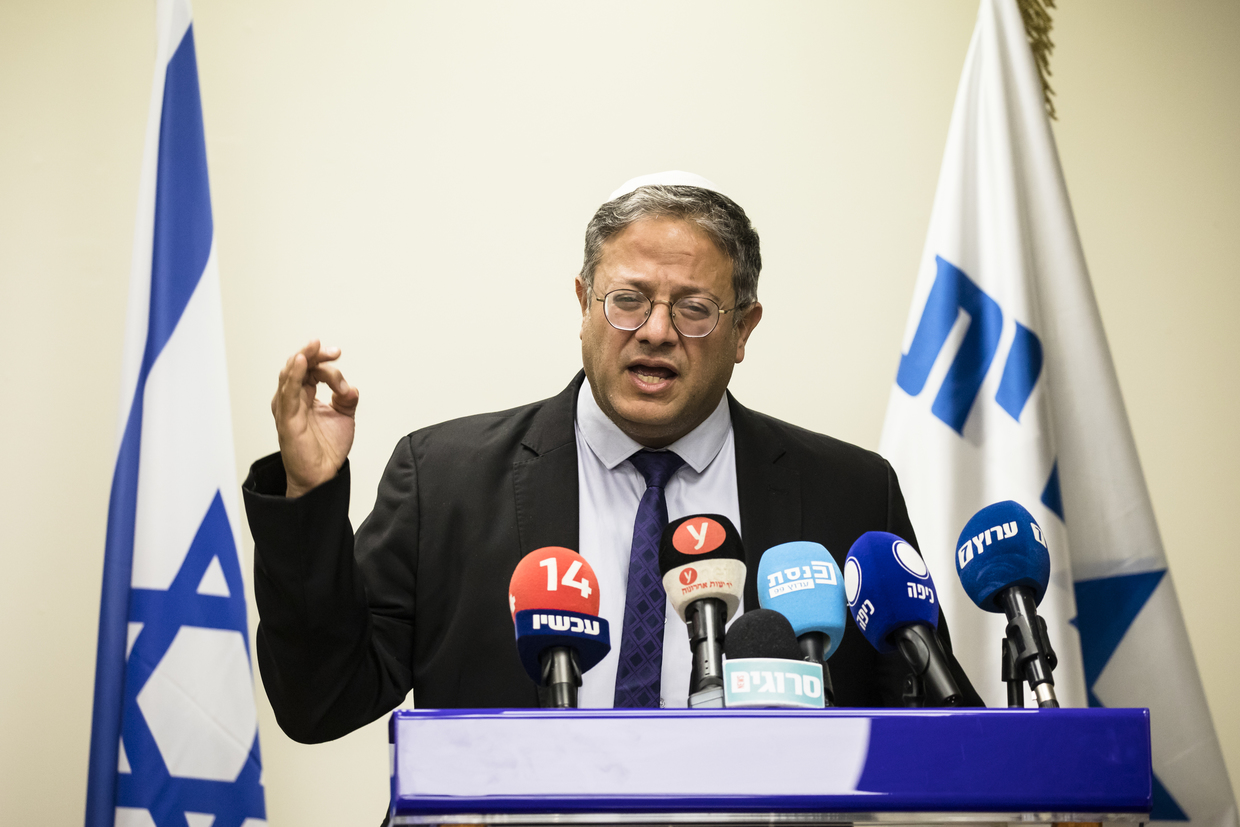
Israel’s National Security Minister Itamar Ben Gvir
Where Assa sees a clear failure is not in intelligence or enforcement, but in perception.
“I think the international community has very little understanding of what Israel is up against,” he argues. “The discussion must start with the fact that we are continuously attacked by radical Islamic terror. We are forced to focus on self-defense.”
Israel’s greatest challenge, he says, is narrative rather than security.
“We cannot compete with the well-oiled, state-sponsored propaganda machine funded by countries like Qatar and amplified by outlets such as Al Jazeera.”
Yet, as the village of Mukhamas smolders and the statistics continue to climb, Israel faces a dilemma that cannot be solved by messaging alone. While Palestinian terror has been suppressed with remarkable efficiency, Jewish extremist violence is rising – unchecked, politically charged, and increasingly visible.
For Israel’s security establishment, the danger may no longer lie only across the lines, but uncomfortably within them.