The US president claims to have “total control” of the waterway amid stalled talks
US President Donald Trump has threatened lethal force against any Iranian boats suspected of laying mines in the Strait of Hormuz, claiming that Washington now has “total control” over the key waterway until Tehran agrees to a deal.
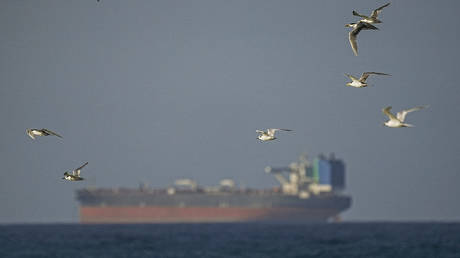
The warning comes amid a maritime standoff in the Strait of Hormuz, a crucial transit route that accounts for approximately 20% of global oil and gas flows. Traffic has largely come to a standstill following the US-Israeli campaign against Iran and Tehran’s subsequent retaliation.
Despite the fragile ceasefire that Trump extended indefinitely earlier this week, the US has maintained its blockade of Iranian ports.
“I have ordered the United States Navy to shoot and kill any boat … that is putting mines in the waters of the Strait of Hormuz,” Trump wrote in a social media post late on Thursday, adding that US mine-sweeping operations are ongoing.
According to the Washington Post, the Pentagon has suggested that clearing suspected mines in the strait could take months.
Trump claimed the US has “total control” over the strait. “No ship can enter or leave without the approval of the United States Navy. It is ‘Sealed up Tight,’ until such time as Iran is able to make a DEAL!!!” he wrote.
Tehran has pushed back, saying it has “the right” to act in the waterway if its national security is threatened and making the lifting of US restrictions a condition for resuming talks.
Tensions in the strait have escalated following recent maritime incidents. This week, Iran’s Islamic Revolutionary Guard Corps (IRGC) released footage showing the interception of two container ships in the waterway, while US forces have reported stopping and redirecting multiple vessels they described as suspected of violating sanctions.
Trump has made clear there is no firm timeline for ending the war, telling Fox News on Wednesday that there was “no time frame.” He claimed that US strikes hit “75% of targets” inside Iran and that any Iranian military buildup during the ceasefire could be neutralized “in about one day.”
The Hormuz disruption has rattled global markets, pushing Brent crude above $100 per barrel. International Energy Agency head Fatih Birol warned of “the biggest energy security threat in history,” while aid groups flagged risks to global food security as fertilizer and agricultural supply chains are hit.
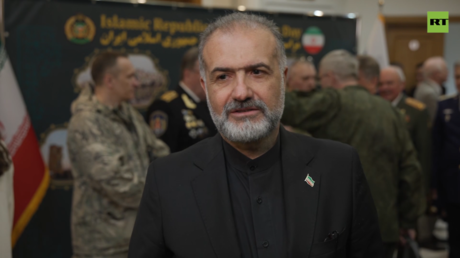
Tehran’s ambassador to Moscow, Kazem Jalali, told RT that Iran is not seeking war but is ready to respond, insisting the country remains open to diplomacy despite the escalation.