Trump backs CFTC oversight, shaping prediction-market compliance
 A regulatory clash over prediction markets has intensified as U.S. political signals converge with ongoing state enforcement actions. President Donald Trump reaffirmed that the Commodity Futures Trading Commission (CFTC) has exclusive authority over prediction markets, arguing that federal oversight should be maintained to ensure the industry’s viability. The stance comes at a moment when several [...]
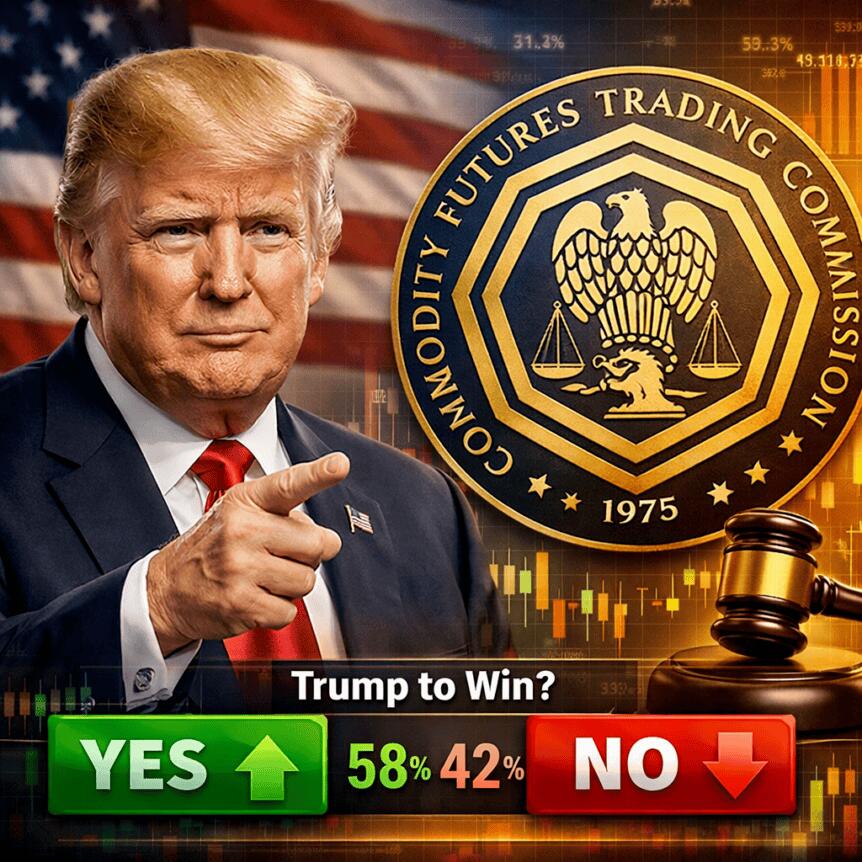
A regulatory clash over prediction markets has intensified as U.S. political signals converge with ongoing state enforcement actions. President Donald Trump reaffirmed that the Commodity Futures Trading Commission (CFTC) has exclusive authority over prediction markets, arguing that federal oversight should be maintained to ensure the industry’s viability. The stance comes at a moment when several states have moved to restrict or challenge platforms such as Kalshi, Polymarket, Crypto.com and Robinhood, claiming they operate gambling activities without proper licensing.
Trump, writing on Truth Social, emphasized the need for a unified federal framework and criticized state officials whom he portrayed as attempting to set their own rules for the sector. He asserted that under his leadership the U.S. would establish “the Gold Standard for the States” in this space and warned against “SCUM” he said were trying to shape policy. These remarks illustrate a broader political dynamic around how prediction markets should be regulated in the United States.
Multiple state authorities have argued that prediction markets violate state gambling laws and have moved to shut down or block platforms. In response, Kalshi and Polymarket have pursued litigation against certain state actions, contending that prediction markets fall squarely under the CFTC’s federal remit. The debate centers on whether state enforcement can or should override, or complement, federal regulation in this evolving market segment.
According to Cointelegraph, CFTC Chair Mike Selig has opposed the states’ efforts, arguing that the agency holds exclusive jurisdiction over prediction markets as federally regulated designated contract markets. The CFTC has pursued legal action against several states—Minnesota, Illinois, New York, and Arizona—for attempting to regulate or ban prediction-market activities within their borders.
Trump’s remarks also highlighted personal and familial ties to the sector. His son, Donald Trump Jr., is reportedly invested in and on the advisory board of Polymarket and serves as an adviser to Kalshi, underscoring the high political and commercial stakes surrounding the policy debate. In the days following his initial stance, Trump signaled a more conciliatory view, suggesting the United States risked falling behind if prediction-market platforms are excluded from the regulatory framework.
Beyond the political debate, the regulatory apparatus has taken concrete steps to structure the market. In March, the CFTC established an advisory team to oversee the listing and trading of event contracts and to ensure that participants meet anti-manipulation, surveillance, and market-integrity requirements. The agency has argued that prediction markets fit within the existing derivatives framework under the Commodity Exchange Act, reinforcing the argument for federal oversight rather than a patchwork of state rules.
Key takeaways
President Trump reaffirmed the CFTC’s exclusive authority over prediction markets, framing federal oversight as essential to industry integrity and competitiveness.
State regulators have pursued licensing actions, cease-and-desist orders, or bans against platforms, arguing that prediction markets operate as unlicensed gambling in their jurisdictions.
The CFTC contends it possesses exclusive jurisdiction over prediction markets as federally regulated markets, a position supported by statements from CFTC leadership cited by Cointelegraph.
Kalshi and Polymarket have challenged state actions in court, while Trump’s stance intersects with his family’s involvement in these platforms, signaling heightened political risk for the sector.
March saw the CFTC establish an advisory team to govern listing and trading of event contracts and to uphold market integrity within the existing derivatives framework.
Federal jurisdiction, design markets, and enforcement posture
The central legal question concerns whether prediction markets operate primarily under federal derivatives regulation or are governed by a mosaic of state gambling laws. Proponents of federal control argue that prediction contracts are designated contract markets within the CFTC’s remit, and therefore fall under federal oversight. Critics, however, note that states have traditionally licensed and regulated gambling activities, and they have moved to apply local rules to prediction-market platforms that operate across state lines. This tension is being resolved, in part, through the CFTC’s insistence on its “exclusive jurisdiction” and the use of federal enforcement tools where states seek to assert their own regulations.
As noted by Cointelegraph, CFTC leadership has repeatedly defended the agency’s mandate in the face of state challenges. The agency has publicly pursued litigation against several states, including Minnesota, Illinois, New York, and Arizona, to counter state measures aimed at restricting or banning prediction markets. The outcome of these disputes could significantly shape how platforms structure their operations, pursue licensing where required, and design compliance programs to satisfy both federal and state regulators.
State actions versus platform adaptations and corporate ties
State authorities maintain that prediction markets operate outside licensed gambling frameworks and therefore require state authorization or prohibition. In response, platforms like Kalshi and Polymarket have contested such actions in court, asserting that they are regulated by the CFTC as designated contract markets under federal law. The legal clash reflects broader concerns about consumer protection, market integrity, and anti-manipulation standards in a rapidly evolving segment that blends financial contracts with real-world event outcomes.
The political dimension is amplified by ties between the platforms and political figures. Trump Jr.’s involvement with Polymarket and Kalshi, coupled with the former president’s shifting rhetoric, underscores a policy debate that intersects with campaign dynamics, regulatory philosophy, and the potential for regulatory alignment with broader U.S. financial-market governance. Observers note that how Congress, the executive branch, and the courts calibrate federal versus state authority will carry implications for licensing regimes, compliance burdens, and cross-border operations of prediction-platforms and related services.
Policy context, risk considerations, and market structure implications
The regulatory trajectory surrounding prediction markets sits at the intersection of several compatibility and enforcement considerations. Analysts will be watching for alignment with broader national and international regulatory frameworks, including how MiCA-style harmonization concepts could influence cross-border activity, and how U.S. agencies (including the SEC, CFTC, and DOJ) coordinate on enforcement priorities. Compliance programs for prediction-market operators must address AML/KYC requirements, anti-manipulation controls, and surveillance capabilities, while licensing regimes continue to evolve at the state and federal levels. The evolving posture also raises questions about how stablecoins, banking access, and payment rails intersect with regulatory expectations for risk management and consumer protection in prediction markets.
Regulatory clarity remains critical for institutional participants, exchanges, and financial-service providers seeking to operate or partner with prediction-market platforms. The balance between safeguarding market integrity and fostering innovation will inform licensing approaches, reporting obligations, and cross-border service provisions in a sector that continues to attract regulatory scrutiny.
Looking ahead, observers should monitor the outcome of state actions against platforms, ongoing court challenges, and any potential federal rulemaking or guidance from the CFTC that could further delineate the boundaries between federal authority and state regulation. The unfolding legal and regulatory narrative will likely influence how these markets evolve, how platforms structure compliance programs, and how traditional financial institutions assess risk and opportunity in this frontier area.
As the regulatory debate continues, the next steps—whether through court rulings, new guidance, or settlements—will shape the trajectory of prediction markets in the United States and their integration with broader financial-market infrastructure.
This article was originally published as Trump backs CFTC oversight, shaping prediction-market compliance on Crypto Breaking News – your trusted source for crypto news, Bitcoin news, and blockchain updates.
About the Author


