Bitcoin Price Crash Below $80K: Liquidations, ETF Outflows and Fed Uncertainty
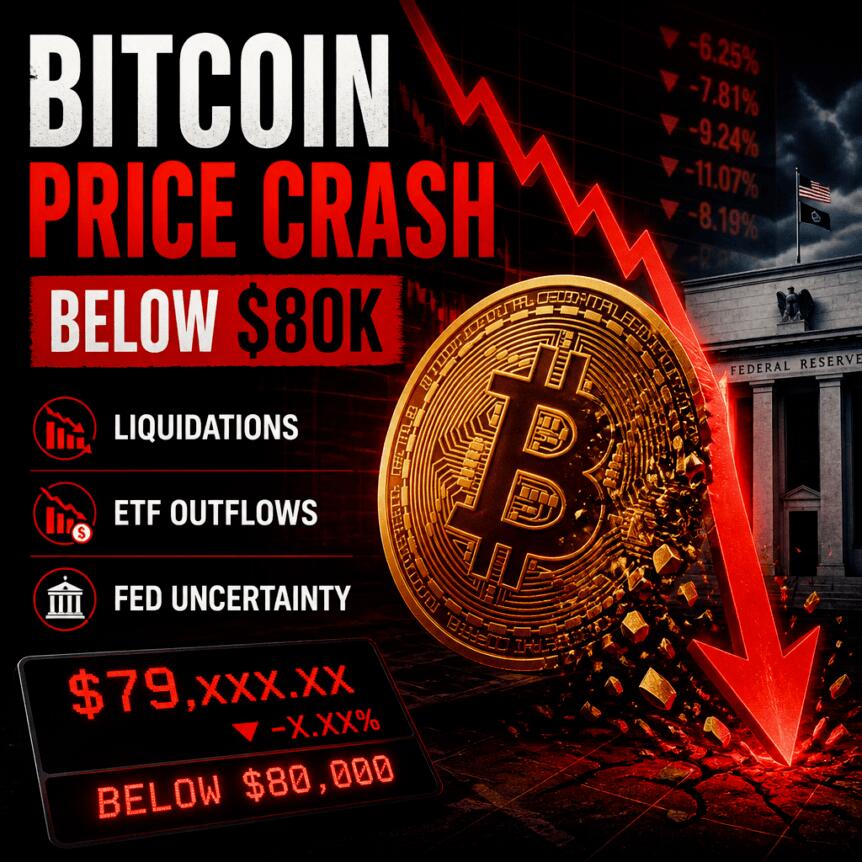 Bitcoin fell below $80,000 as leveraged liquidations accelerated selling, spot Bitcoin ETFs logged heavy outflows, and Fed uncertainty plus Iran tensions added pressure across crypto markets.

Bitcoin fell below $80,000 on Saturday, October 24, as forced liquidations and fund withdrawals increased selling pressure. The cryptocurrency dropped 1.91% over 24 hours to $79,994.97 during the initial decline. Meanwhile, upcoming Federal Reserve decisions, US economic data, and tensions involving Iran added pressure across digital asset markets.
The decline pushed Bitcoin below a key psychological price level for the first time since October 15. Leveraged traders faced mounting losses as falling prices reduced the value of their positions. At the same time, withdrawals from Bitcoin exchange-traded funds signaled reduced exposure through regulated investment products.
The broader cryptocurrency market also weakened during weekend trading, with several major tokens posting losses. Market data placed total cryptocurrency market capitalization at approximately $2.68 trillion, down 2.19%. However, the available figures do not establish how much each individual factor contributed to Bitcoin’s decline.
Leveraged Bitcoin Liquidations Accelerate Selling Pressure
Cryptocurrency liquidations reached approximately $219 million within one hour as Bitcoin dropped below $80,000. More than $200 million in leveraged long positions faced liquidation within just 15 minutes. These forced closures added selling pressure as traders struggled to maintain the collateral required for their positions.
Leveraged long positions allow traders to gain greater market exposure using borrowed funds or margin. However, exchanges can automatically close positions when losses reduce account equity below required maintenance levels. Therefore, a rapid price decline can trigger forced sales and intensify downward momentum across cryptocurrency markets.
The reported liquidation figures highlight the risks associated with excessive leverage during volatile trading sessions. Meanwhile, the Crypto Fear and Greed Index stood at 42, indicating neutral overall sentiment. Although that reading did not signal extreme fear, forced closures demonstrated the pressure facing leveraged market participants.
Bitcoin ETF Outflows Exceed $635 Million
US spot Bitcoin exchange-traded funds recorded approximately $635.6 million in net outflows on October 22. BlackRock’s IBIT accounted for around $254.1 million in withdrawals, while Fidelity’s FBTC recorded approximately $217.5 million. These figures marked a reversal from the positive flows reported during the previous trading session.
Withdrawals continued on Friday, with another $137.9 million leaving US spot Bitcoin ETFs before weekend trading. Consequently, the products logged several sessions of substantial outflows during a period of falling cryptocurrency prices. The withdrawals also reduced the amount of capital retained in these investment vehicles.
Spot Ethereum ETFs faced similar pressure, recording approximately $110.6 million in net outflows on October 22. BlackRock’s ETHA accounted for around $75.5 million of that total, according to the reported figures. Together, the Bitcoin and Ethereum fund movements reflected weaker demand through these investment products during the period.
Federal Reserve Meeting and US Elections Add Market Pressure
The Federal Reserve scheduled its next policy meeting for October 27–28, placing interest rates at the center of market attention. Additionally, US personal consumption expenditures inflation data for September was due on October 29. These events could influence expectations for borrowing costs, financial conditions, and demand for risk-sensitive assets.
Higher interest rates can reduce the appeal of assets that offer no conventional income, including Bitcoin. Conversely, expectations of lower borrowing costs can support demand for riskier investments when other conditions remain favorable. However, the upcoming policy decision does not independently explain the cryptocurrency’s latest price decline.
The US midterm elections scheduled for November 3 introduced another source of uncertainty for digital asset markets. Congressional control could influence future cryptocurrency legislation and financial market oversight. Still, the election’s approaching date alone does not establish a direct link to Saturday’s selloff.
Iran Tensions Add Pressure Across Cryptocurrency Markets
Geopolitical tensions involving Iran provided another potential source of pressure during the cryptocurrency decline. President Donald Trump raised the possibility of further military action against Iran in remarks reported on October 23. However, the remarks did not establish a specific timetable or confirm an imminent military operation.
Any escalation could affect energy markets, inflation expectations, and demand for assets exposed to financial risk. In turn, changes in broader market conditions could influence cryptocurrency trading alongside other risk-sensitive investments. Still, the available information does not quantify the direct effect of Iran-related developments on Bitcoin’s price.
The selloff extended beyond Bitcoin, as Ethereum fell below $2,300 during the reported decline. XRP traded near $1.25, while Solana dropped below $100 as losses spread across major digital assets. Dogecoin and Cardano also weakened, highlighting the breadth of the market downturn.
What the Bitcoin Decline Means for the Cryptocurrency Market
Bitcoin’s move below $80,000 coincided with leveraged liquidations, substantial ETF withdrawals, and several approaching economic events. Together, these developments provided multiple possible sources of selling pressure during the weekend session. However, their individual contributions remain difficult to separate using the reported figures alone.
The latest decline also showed how leverage can intensify price movements when market conditions deteriorate. Meanwhile, ETF outflows indicated that some capital left regulated cryptocurrency investment products during the same period. Economic policy expectations and geopolitical tensions added further uncertainty to an already weak trading environment.
Bitcoin’s immediate performance will depend partly on market demand, trading liquidity, and developments surrounding monetary policy. ETF flow data and liquidation figures will also help explain whether selling pressure persists beyond the weekend. For now, the drop below $80,000 marks a significant setback for Bitcoin and reflects broader weakness across cryptocurrency markets.
This article was originally published as Bitcoin Price Crash Below $80K: Liquidations, ETF Outflows and Fed Uncertainty on Crypto Breaking News – your trusted source for crypto news, Bitcoin news, and blockchain updates.
About the Author