Denmark’s 4% Crypto Ownership Highlights EU Adoption Gap
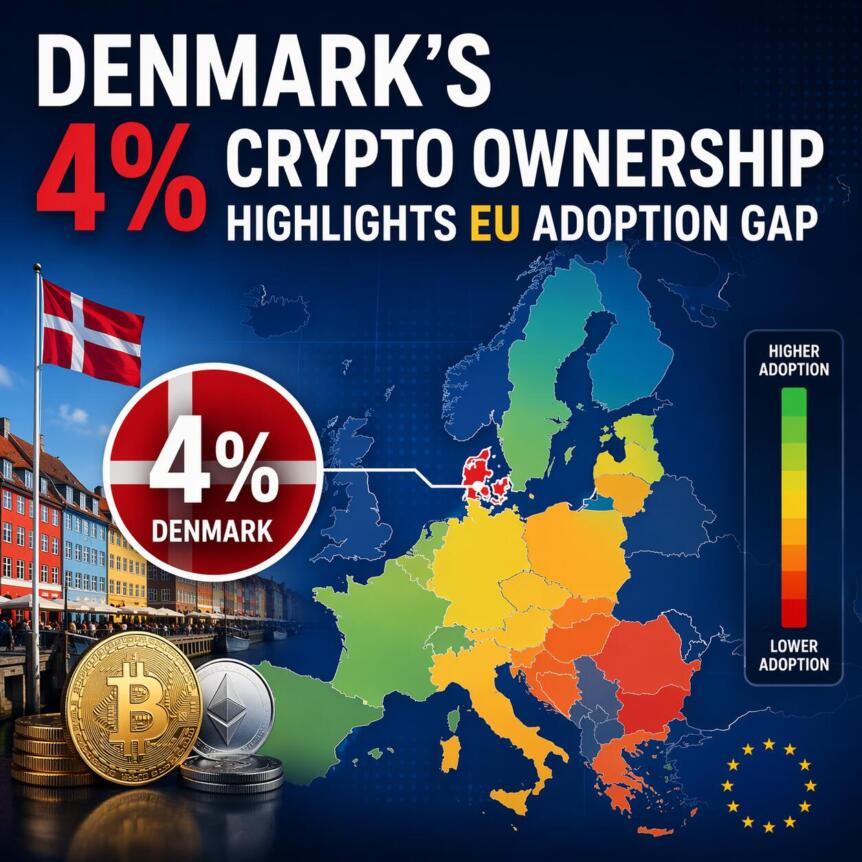 A Danmarks Nationalbank staff paper published this week places Denmark’s crypto exposure in a distinctly cautious light, revealing that only 4% of Danes own cryptocurrencies. The figure has remained flat since 2023 even as crypto markets expanded across Europe. The study, based on a 2025 survey conducted by Epinion, estimates national holdings between roughly $317 [...]
A Danmarks Nationalbank staff paper published this week places Denmark’s crypto exposure in a distinctly cautious light, revealing that only 4% of Danes own cryptocurrencies. The figure has remained flat since 2023 even as crypto markets expanded across Europe. The study, based on a 2025 survey conducted by Epinion, estimates national holdings between roughly $317 million and $847 million and shows that the typical position is small.
The paper draws on responses from 3,013 citizens aged 15 and older, collected between October and November 2025 through Denmark’s Digital Post system. Respondents could answer online or by phone, and the sample was weighted to reflect national demographics. Alongside the ownership rate, the report highlights how Danish crypto activity is distributed and what factors appear to influence adoption, including historical banking norms and tax treatment.
Key takeaways
Only 4% of Danes own cryptocurrency, a share unchanged since 2023.
Among holders, most positions are under 10,000 Danish kroner (about $1,570); national exposure is estimated at $317 million to $847 million.
Indirect exposure through crypto-linked stocks and exchange-traded products stands at about $211 million, roughly 0.4% of total equity holdings.
Crypto ownership skews toward younger, higher-income individuals; participation declines sharply after age 60.
Retention and custody patterns show 70%–75% of users rely on service providers, while 20%–30% self-custody assets; Danske Bank began offering crypto exposure via BTC and ETH ETFs earlier this year.
Denmark’s crypto footprint versus Europe
The National Bank’s assessment places Denmark toward the lower end of crypto adoption in Europe. The paper notes that other European countries—such as Norway and Finland—along with the United Kingdom, report crypto ownership rates above 10% of their populations, indicating a broader regional ascent. The disparity underscores how local factors shape investor behavior even as global interest in digital assets grows.
Several explanations surface in the report for Denmark’s slower uptake. The Danish banking system has historically taken a cautious stance toward crypto, with banks rarely enabling purchases on their platforms and often discouraging crypto investments as high-risk. The analysis also cites earlier asymmetric tax treatment as a potential dampener on widespread adoption, suggesting that regulatory and fiscal clarity could be pivotal in shifting attitudes over time.
Banking shifts, investor attitudes, and regulatory context
Despite the cautious backdrop, institutional moves are beginning to reshape access. Earlier this year, Danske Bank—the country’s largest lender—began permitting customers to invest in crypto exposure through exchange-traded products tied to Bitcoin and Ethereum. The bank characterized the shift as part of a broader trend of growing demand for crypto exposure among clients, coupled with a clearer regulatory framework at the European level, including developments around the Markets in Crypto-Assets Regulation (MiCA).
While the Danmarks Nationalbank study confirms that most Danes remain wary of crypto as a daily payments method, the fact that a major bank is offering regulated crypto access suggests a potential for incremental uptake. Regulatory clarity, particularly from MiCA and any subsequent EU iterations, is singled out as a key factor shaping future adoption. The paper reinforces that, for many Danes, crypto remains an investment play rather than a transactional technology.
What to watch next for Danish crypto exposure
Several dynamics will likely determine whether Denmark’s crypto footprint grows. First, stricter or clearer EU-wide rules could lower perceived risk and encourage more institutions to offer regulated products. Second, tax policy changes—if pursued—could alter the cost-benefit calculus for individual investors and wealth managers. Third, ongoing shifts in custody infrastructure and product availability (for example, more self-hosted options or regulated custody services) may affect how Danes choose to hold crypto assets.
Overall, the NatBank’s survey paints a picture of a crypto market that has yet to become mainstream in Denmark, despite pockets of growing interest. The alignment (or misalignment) between regulatory signals, tax treatment, and bank-driven access will be critical to watch in the coming months as European markets continue to mature in their approach to digital assets.
What remains uncertain is how swiftly these systemic factors will translate into higher participation, especially among younger cohorts who have historically driven crypto adoption elsewhere. As MiCA 2 and related national policies evolve, observers will be watching whether Denmark’s modest baseline remains unchanged or begins to pick up pace in the next wave of retail involvement.
This article was originally published as Denmark’s 4% Crypto Ownership Highlights EU Adoption Gap on Crypto Breaking News – your trusted source for crypto news, Bitcoin news, and blockchain updates.
About the Author


