Carriers are axing flights en masse amid soaring jet fuel prices caused by the US-Israeli war on Iran and the Strait of Hormuz blockade
The steep rise in jet fuel prices caused by the US-Israeli war on Iran is posing a bigger challenge to the global airline industry than the Covid-19 pandemic did, according to AirAsia CEO Tony Fernandes.
In response to the US-Israeli aggression, Tehran has closed the Strait of Hormuz – a choke point through which around 20% of global crude passes – to “enemy ships.” US President Donald Trump has meanwhile imposed a blockade on Iranian ports. Massive maritime traffic disruptions have sent global oil prices above $100 a barrel, resulting in a spike in jet fuel prices as well.
In an interview with the Financial Times on Thursday, Fernandes said he thought he had “seen it all with Covid… but having seen jet fuel go up almost three times – this is much worse.”
“You wake up one day and your major cost has tripled – it was quite a new experience for me and I’ve been through a lot in my life,” the AirAsia CEO added.
Last week, Ryanair CEO Michael O’Leary similarly predicted that “if it continues at $150 a barrel into July, August, September, then you’ll see European airlines fail.”
According to the aviation analytics company Cirium, carriers have cut 13,000 flights from May schedules worldwide.
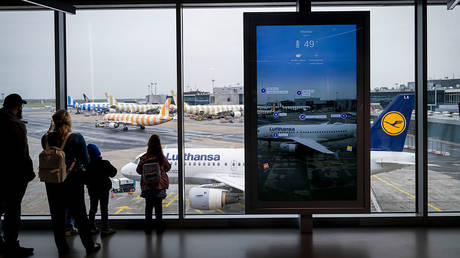
Germany’s Lufthansa has announced the cancellation of 20,000 short-haul flights through October, while Scandinavian Airlines has recently axed around 1,000 flights.
Turkish Airlines and Air China have taken similar steps, among numerous other carriers.
Last Saturday, US-based low-cost carrier Spirit Airlines said it was shutting down due to the sudden and sustained rise in fuel prices in recent weeks. The closure of the seventh-largest passenger carrier in North America is expected to leave around 17,000 people without work.
Kirill Dmitriev, Russian President Vladimir Putin’s special envoy for investment and economic cooperation, said on X that the “global aviation shock is spreading quickly and is a HARBINGER of the more severe shocks to come in other sectors.”