The fatal stabbing of the 18-year-old student has sparked outrage over race, policing, and knife crime in Britain
The murder of 18-year-old student Henry Nowak has sparked national outrage in the UK after police bodycam footage submitted to court showed officers arresting and handcuffing him as he lay dying, while his killer remained uncuffed after falsely claiming to be the victim of a racist attack.
The case has triggered protests, renewed accusations of two-tier policing, and an investigation into how British authorities handled the incident.
Who was Henry Nowak?
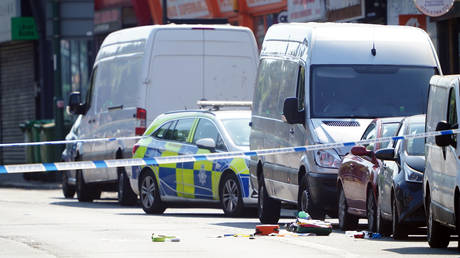
Nowak was an 18-year-old University of Southampton student from Chafford Hundred, east of London in Essex. He was walking back to his student accommodation on December 3, 2025, when he was attacked in Belmont Road.
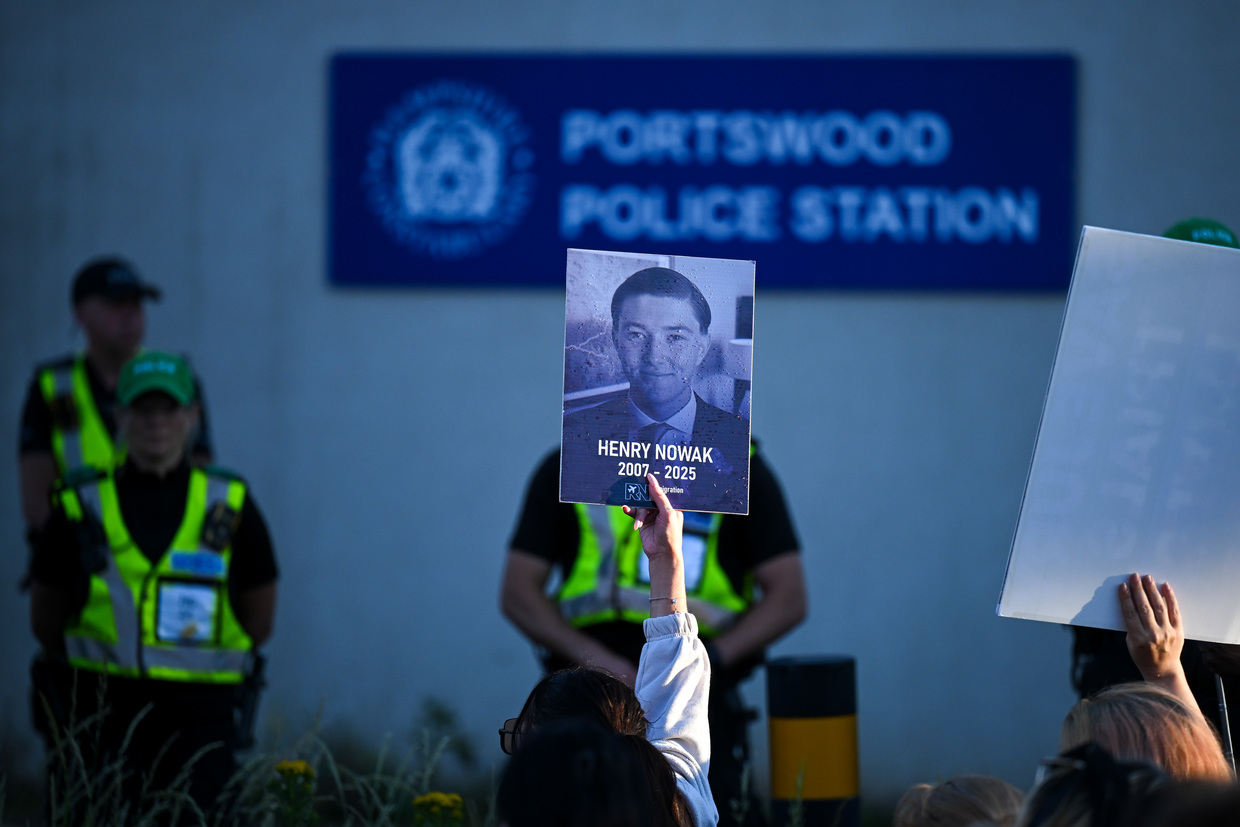
Protestor holds photo of Henry Nowak outside Portswood Police station in Southampton, England.
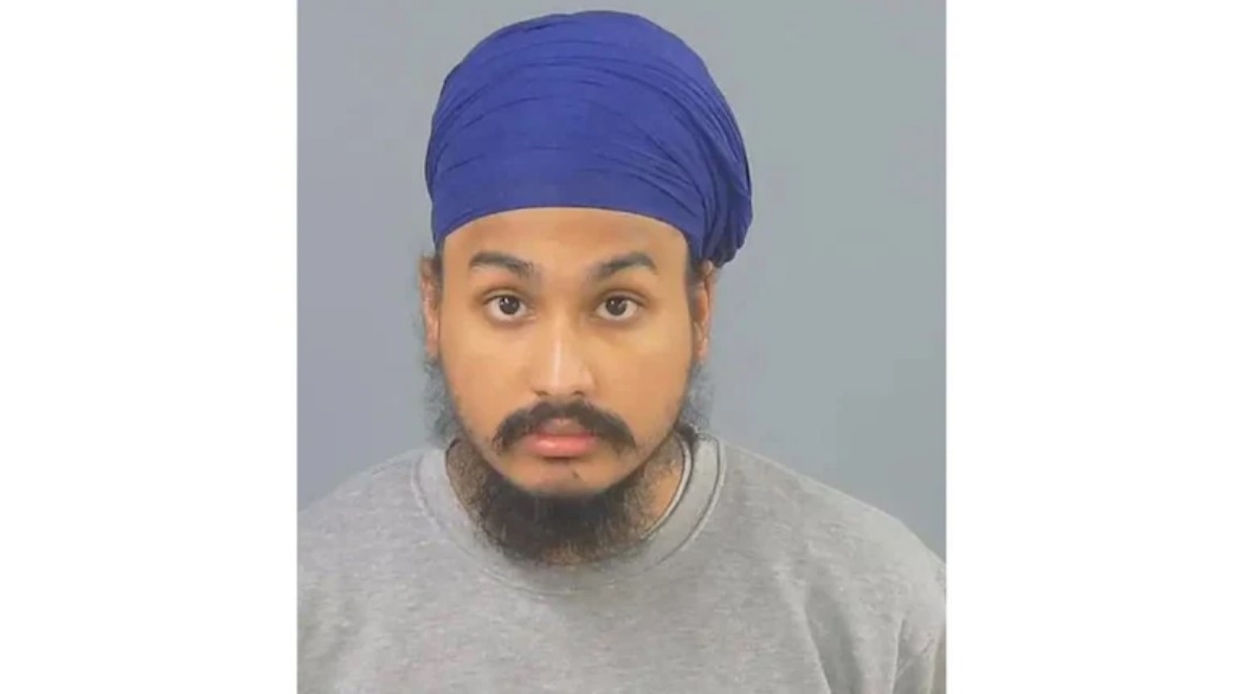
Vickrum Singh Digwa is a 23-year-old Sikh from Southampton who had no previous convictions before the murder. He lived with his family on St. Denys Road in Southampton and had been helping his brother with Deliveroo deliveries on the night of the attack.
Prosecutors, however, have described him as a man with a “weapons obsession.” A British court heard that he had trained with weapons since the age of 12, slept in a bedroom surrounded by weapons, and had frequently searched for weapons on his phone.
Police reportedly also found a cache of more than 20 weapons at Digwa’s family home, including flick knives, knuckledusters, swords, a machete, an extendable baton, an axe, and an air rifle.
The murder
On December 3, 2025, while en route to his accommodation in Southampton, Nowak encountered Digwa in Belmont Road.
Shortly before the attack, Nowak recorded Digwa openly wearing a large blade hitched on his belt. In the video, Nowak can be heard saying: “You’re a bad man, say you’re a bad man,” to which Digwa replies: “I am a bad man.” The video cut off after that.
Digwa then stabbed Nowak five times, including wounds to the backs of his legs and a fatal wound to the heart. Police later found Nowak’s phone hidden in Digwa’s pocket.
The police response
Police were called to the scene by Digwa’s brother Gurpreet, who told officers that they had “just been attacked racially by some white person.” This was a lie.
When officers arrived, Digwa told police that Nowak had racially abused him, punched him, grabbed his hair, and torn off his turban. Police believed Digwa’s account and treated Nowak as the suspect.
Bodycam footage showed officers handcuffing Nowak, who was lying on the ground and repeatedly telling them he had been stabbed and could not breathe. One officer responded: “Don’t think you have, mate.”
Nowak was dragged across gravel, placed under arrest for assault, and left in handcuffs as he lost consciousness and drowned in his own blood.
Digwa, who still had the murder weapon on him, was not handcuffed.
The trial
Digwa was arrested after officers eventually realized Nowak had been stabbed, and was later charged with murder and possession of a bladed article in a public place. He denied murder and claimed he had acted in self-defense.
His defense argued that Digwa was attacked first and feared that Nowak could use his blade against him. Digwa also claimed he had not realized he had inflicted the fatal chest wound. Prosecutors rejected that account, describing the racism allegation as a “wicked lie” and claiming that Digwa attacked Nowak without provocation, filmed him while he was wounded, and did not immediately call police or an ambulance. The court also heard that Nowak’s phone, found hidden in Digwa’s pocket, contained no evidence of racial abuse.
Has Digwa been sentenced for the murder of Nowak?
The jury convicted Digwa on May 28 and on Monday, he was sentenced to life in prison with a minimum term of 21 years.
Digwa’s mother, Kiran Kaur, was also found guilty of assisting an offender after hiding the murder weapon and will be sentenced on July 17.
Less than a day after Digwa was sentenced, he appeared again at Southampton Magistrates’ Court alongside his father Moga Singh, 52, and brother Gurpreet, 27, on separate weapons charges linked to the cache found at the family home.
The religious weapon argument
Digwa attempted to justify carrying a blade by citing his Sikh faith. Practising Sikhs are legally allowed to carry a small ceremonial knife known as a kirpan.
🇬🇧 This is the knife that Vickrum Digwa used to kill Henry Nowak
He said he carried it as part of his Sikh faith
Sikhs in the UK are allowed to carry knives called Kirpans, but for regular Brits, if they carry a knife the same size, they face a prison sentence
The court heard, however, that Digwa was carrying both a small traditional kirpan concealed under his clothing and a much larger 21 cm knife worn openly on his belt, with which he stabbed Nowak five times.
Judge William Mousley KC rejected Digwa’s attempt to link the killing weapon to Sikh religious practice, telling him that he had brought shame upon his family, his community and his religion.
Response
The case has prompted outrage and condemnation across Britain, with much of the anger focused not only on the killing itself but on the way police treated Nowak after accepting Digwa’s false racism allegation.
Nowak’s father, Mark, said his son “did not die with dignity” and described the police treatment as “inhumane and degrading.”
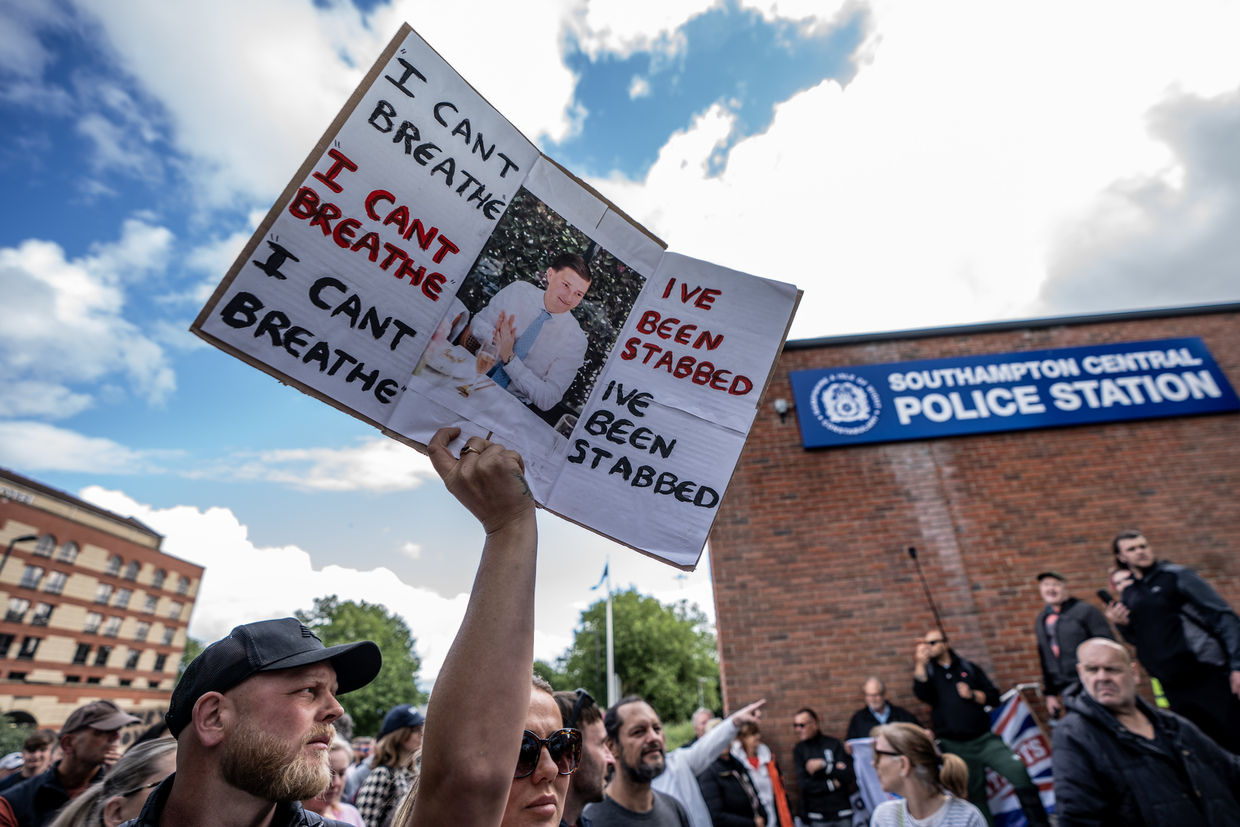
Protestor outside Southampton Central Police Station holds a placard during a rally demanding “Justice for Henry Nowak”.
“Henry told officers that he could not breathe nine times. He told them that he had been stabbed four times,” he said. He contrasted this with Digwa’s treatment, saying the killer was believed, initially left uncuffed, and later taken inside the family home, where police “even took him to the kitchen so he could choose his food.”
How have UK politicians reacted to Nowak’s death?
Reform UK leader Nigel Farage called on the British public to respond with “pure, cold rage.” In a statement on Tuesday, Farage described the case as “proof, if ever there was any, that we’re living in a two-tier culture in this country where the rights and privileges of white people matter less than those of ethnic minorities.”
Conservative leader Kemi Badenoch called the footage “awful,” said there had been “multiple failures,” and urged the government to treat the case as seriously as it had treated the killing of George Floyd in the US.
The fear of being called racist was greater than dealing with Henry Nowak’s murder.
UK Prime Minister Keir Starmer said the bodycam footage was “really harrowing” and that there were “serious questions for police,” including how accusations of racism shaped their decision-making. However, he rejected claims that Britain has a problem with “two-tier policing.”
Home Secretary Shabana Mahmood also warned MPs against politicizing the case, insisting it was about murder, not about Sikhism or race.
Public outrage and protests
Public anger escalated after Digwa’s sentencing and the release of the police bodycam footage. Hundreds of protesters gathered in Southampton, outside the city’s police station and later near the Digwa family home chanting Nowak’s name and “I can’t breathe.”
Activist Tommy Robinson addressed the crowd outside the police station, telling demonstrators the case was “about race.” Violence erupted. Chairs, cans, flares, bricks, bins and an e-scooter were reportedly thrown at riot police, forcing officers to retreat in some areas. Eleven officers and a police dog were injured, according to reports.
Two people have been arrested so far while police said they are reviewing footage and could make additional arrests.
The Nowak case has renewed the broader debate over “two-tier policing” and whether the British authorities hesitate to act against minority suspects, even in cases of serious violence, while responding harshly to public anger over immigration and crime.
Some examples include the 2023 Nottingham murders, when a paranoid schizophrenic migrant killed three people after mental health workers released him out of fear of being perceived as racist, and the 2024 Southport murders, where police appeared to grant leniency and refused to disclose the identity of a Rwandan teenager who killed three young girls and injured ten others at a dance class.
The protests that erupted in response have been met with rapid arrests and prison sentences while the British government has faced accusations of cracking down on free speech and arresting citizens for any form of criticism of immigration, crime, and policing failures.
The latest incident has also tied into the UK’s long-running knife-crime crisis, with critics arguing that police and politicians prioritize policing speech, protests, and “hate incidents” while failing to get dangerous blades and violent offenders off the streets.
How is the British establishment reacting to public anger over Nowak’s death?
In parliament, Starmer commended Nowak’s family for showing “extraordinary dignity” after his life was “stolen in appalling circumstances.” He said there were “serious questions to answer,” but condemned the Southampton clashes as “disgraceful and completely unacceptable.”
“This is a time for serious work, not rage,” the prime minister said.
Policing minister Sarah Jones has also appealed for calm.
The National Police Chiefs’ Council is reviewing its anti-racism commitments after MPs raised concerns that the guidance could encourage officers to treat people differently based on ethnicity.
The Independent Office for Police Conduct is reviewing bodycam footage and trial material and is expected to report within three months.
Hampshire and Isle of Wight Constabulary has apologized for how Nowak was treated. One of the four officers involved has resigned, while the other three continue to serve and are being treated as witnesses.
The Attorney General’s Office is also considering requests to review Digwa’s sentence under the unduly lenient sentence scheme.