Researchers from the Advanced School of Microwave Electronics Engineering at RTU MIREA, Nikita Rashutin and Svetlana Tyurina, in collaboration with specialists from the Institute of Physical Chemistry of the Russian Academy of Sciences (IPCE RAS), have developed a novel polymer coating that alters the scale formation process. On brass surfaces, deposits transform into a dense, stone-like layer, whereas on the polymer-coated surface, scale becomes porous and easily removable. This breakthrough offers a way to protect heat exchange equipment in power plants and industrial settings without resorting to constant chemical cleaning or enduring downtime.
Scale buildup in boilers and heat exchangers has always been a persistent challenge for energy professionals. Saline deposits on internal walls impede heat transfer efficiency, force equipment to operate under strain, and lead to premature wear. Conventional methods for tackling this issue, such as chemical water softening and acid flushing, are expensive, labor-intensive, and environmentally detrimental. Scientists at RTU MIREA have proposed an alternative: safeguarding metal surfaces with a polymer coating designed to modify crystal growth patterns.
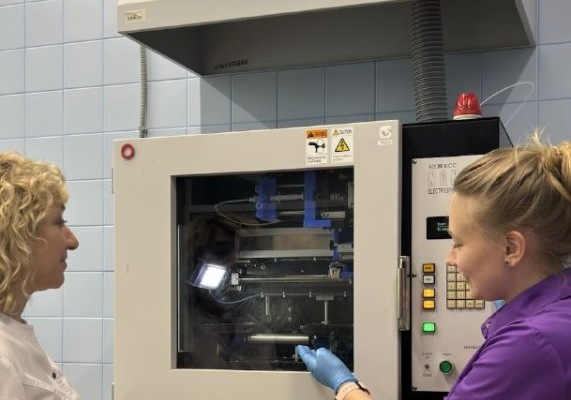
During their experiments, two types of substrates were compared: plain brass and brass treated with the developed polymer coating. These samples were then placed in an accelerated scaling test rig, where saline deposits were formed using hard water.
The outcomes revealed striking differences. On the brass substrate, a dense, monolithic scale layer, measuring tens of micrometers in thickness, was observed. Energy-dispersively X-ray spectroscopy confirmed that this layer was predominantly composed of magnesium carbonate (MgCO₃), a typical “scale” that is difficult to remove through mechanical means.
In stark contrast, the polymer-coated surface exhibited a fundamentally different scaling pattern. The scale here appeared as a loose, non-continuous deposit. Furthermore, the chemical composition had shifted, incorporating not only magnesium carbonate but also magnesium hydroxide and its hydrated forms. This type of layer could be easily dislodged with even minimal mechanical force.
“On metal, scale solidifies into a stone-like, dense, monolithic structure that is exceedingly difficult to remove. Our coating intervenes in the crystallization mechanism, resulting in a loose, powder-like precipitate that is easily detached. This allows for extended maintenance intervals for equipment and reduces the expenditure on chemical agents,” explains Nikita Rashutin, an instructor at the Department of Materials Engineering within the Advanced School of Microwave Electronics Engineering at RTU MIREA.
“We have gained the ability to manage protective coatings. By adjusting the polymer’s composition, we can influence the type of salts that crystallize on the surface – whether it’s robust carbonate or friable hydroxide. This paves the way for the creation of ‘smart’ anti-scaling materials capable of adapting to specific operational conditions. A patent for the testing apparatus has already been secured, and our research is ongoing,” comments Svetlana Tyurina, head of the Department of Materials Engineering at the Advanced School of Microwave Electronics Engineering at RTU MIREA.
The findings of these studies were presented in the proceedings of the international scientific and technical conference “OPTOTECH-2025.” The information was sourced from the “Nauchnaya Rossiya” portal (https://scientificrussia.ru/).
About the Author