
The conflict has apparently ended, having cost US taxpayers billions, killed thousands, and disrupted global energy markets
The US-Iran war appears to have ended after 108 days, costing American taxpayers over $100 billion, according to estimates gathered by the independent Iran War Cost Tracker.
On Tuesday, US President Donald Trump signed a memorandum of understanding with Iran, with Tehran also confirming the electronic signing of the document. Iranian Foreign Ministry spokesman Esmaeil Baghaei said the agreement has gone into effect.
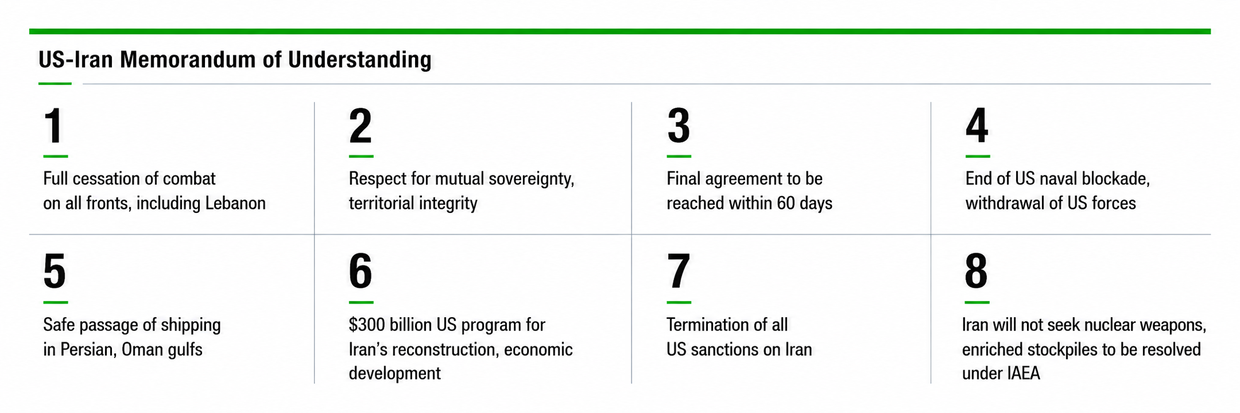
What is in the US-Iran memorandum?
The memorandum is meant to extend the ceasefire, reopen the Strait of Hormuz and launch a 60-day negotiating window on a broader settlement, including sanctions relief and nuclear-related commitments.
The deal marks a possible end to a war that has killed thousands of people, displaced millions, depleted US military stockpiles, and driven up energy prices despite Trump’s repeated claims that the conflict would be swift.
How much did the US-Israel war on Iran cost American taxpayers?
Operation Epic Fury began on February 28, when the US and Israel launched an unprovoked attack on Iran. The Iran War Cost Tracker counted a total 108 days of war, ending on June 16.
READ MORE: Iran declares victory over US
The final US taxpayer bill for the conflict has come out to an estimated $113.3 billion, according to the tracker. The evaluation is based on the Pentagon’s March statement that the first six days of the war cost $11.3 billion, followed by an additional $1 billion per day for continuing operations.
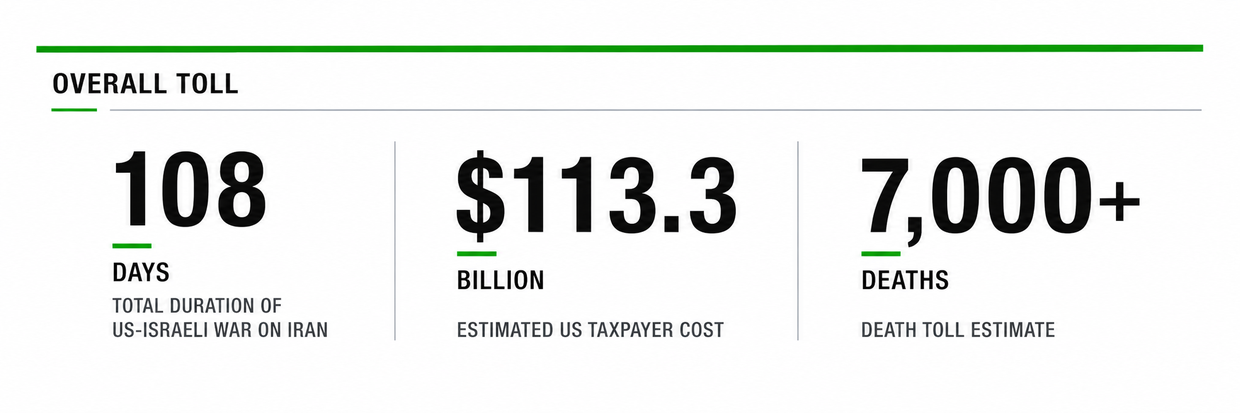
The figure, however, is believed to be much higher as it may not fully include things like prewar buildup costs, munitions replacement, interest on debt, and classified programs.
What were US military losses during the war on Iran?
At least 42 US military aircraft were reportedly lost or damaged during the course of the war, costing between $2.3 billion and $2.8 billion, according to a Congressional Research Service tally published last month.
The losses included dozens of MQ-9 Reaper drones, several F-15E Strike Eagles, one F-35A fighter jet, an A-10 ground attack aircraft, seven KC-135 Stratotanker refueling aircraft, and an AH-64 Apache attack helicopter that went down near the Strait of Hormuz earlier this month.
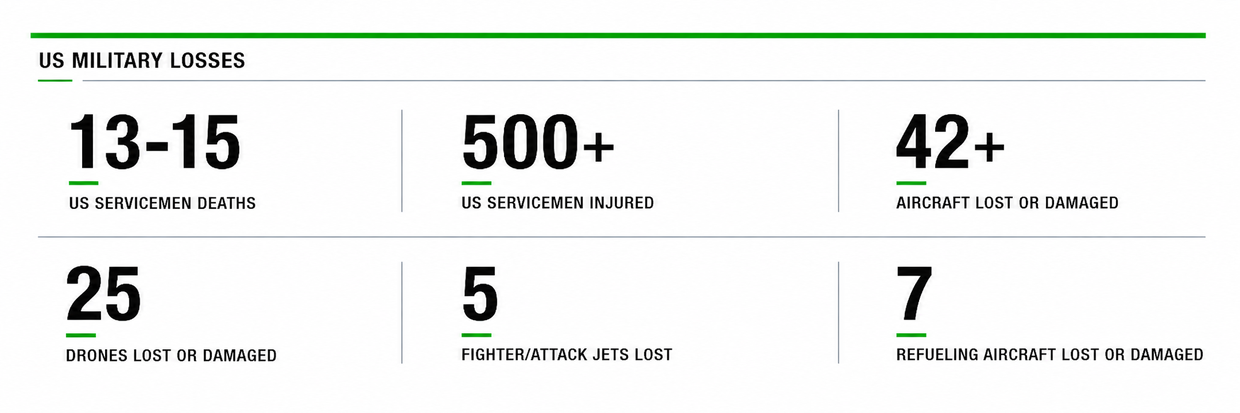
Six US airmen were also confirmed killed in a KC-135 crash over western Iraq. Casualty trackers have put total US military deaths during the conflict at 13 to 15. Other public estimates report over 500 servicemen were injured during the conflict.
How many people were killed during the US-Israeli war on Iran?
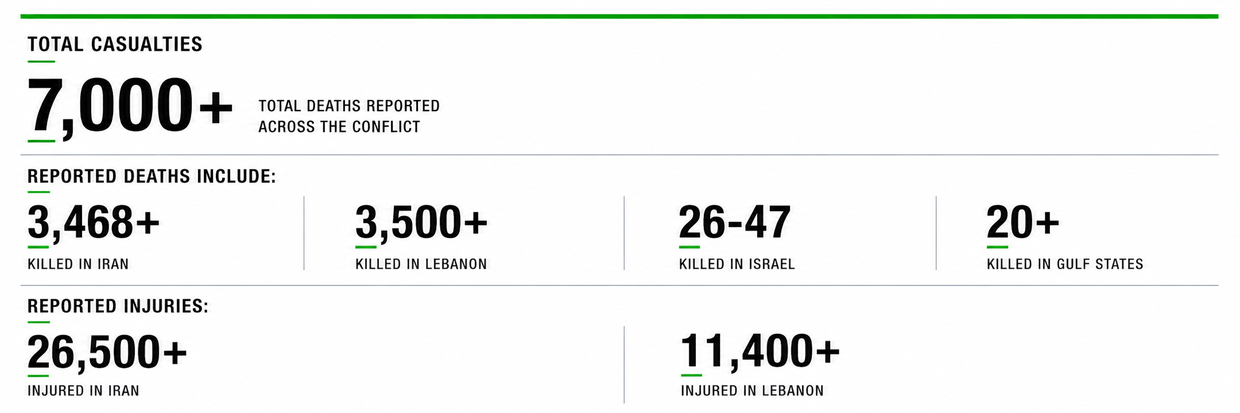
More than 7,000 people are estimated to have been killed across the region throughout the war. Iranian officials have reported more than 3,400 of their citizens killed and over 26,000 wounded. Lebanon’s health authorities reported more than 3,500 killed in Israeli strikes after the conflict spilled into that country.
Israel also reported fatalities from Iranian missile and drone strikes, while several Gulf states recorded casualties from attacks on US bases and energy infrastructure.
What was the worst atrocity during the US-Israeli war on Iran?
The war’s most symbolic civilian tragedy came on its opening day, when a strike hit the Shajareh Tayyebeh elementary school in Minab, southern Iran. The building was located near a naval base but separated from military facilities by a fence visible in satellite imagery.
Iranian media and rights groups have put the death toll at up to 155 people, nearly all of them young children.
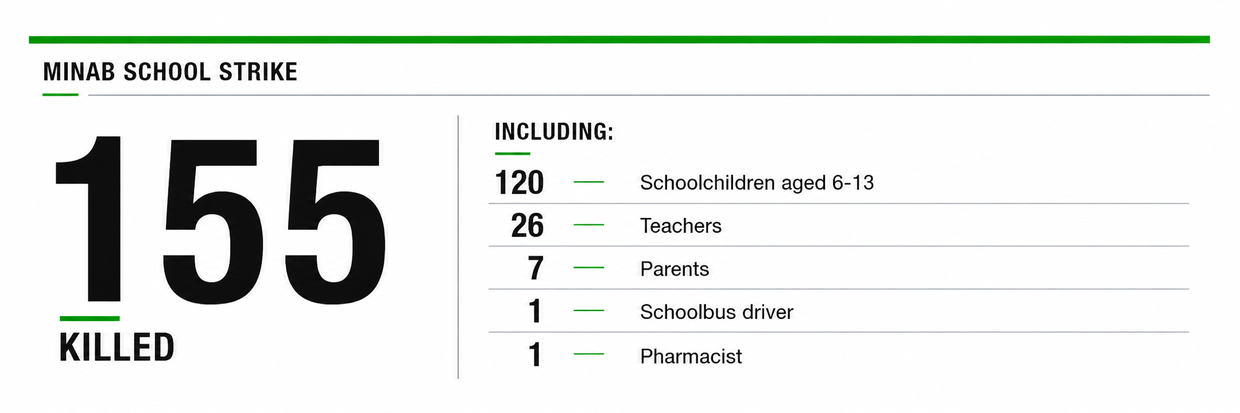
Rights groups have demanded accountability from Washington for the strike, accusing it of war crimes. The US has not released a final public finding on responsibility, while Trump has said that “mistakes are made” and that “nobody did that on purpose.”
Trump’s repeated promises
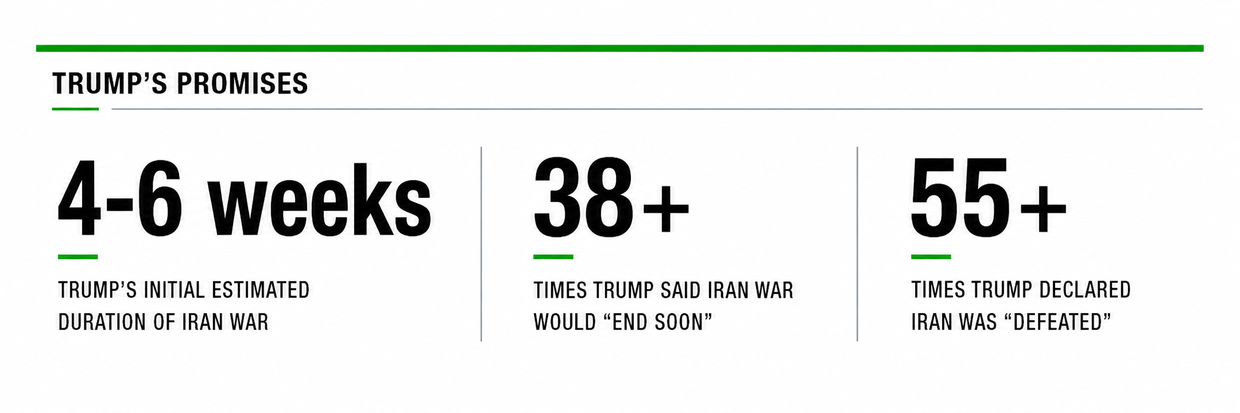
Throughout the conflict, Trump repeatedly suggested the war would end in a matter of weeks. In early March, he described the operation as a short-term “excursion” that would be finished “pretty quickly.”
READ MORE: Middle East ‘bully is dead’ – Trump
He later repeatedly said it would end “soon” or “very soon,” even as fighting dragged on. By April, US media were compiling timelines of Trump’s shifting statements, repeated declarations of victory, and changing estimates for when the war would end.
What economic impact did the US-Israeli war on Iran have?
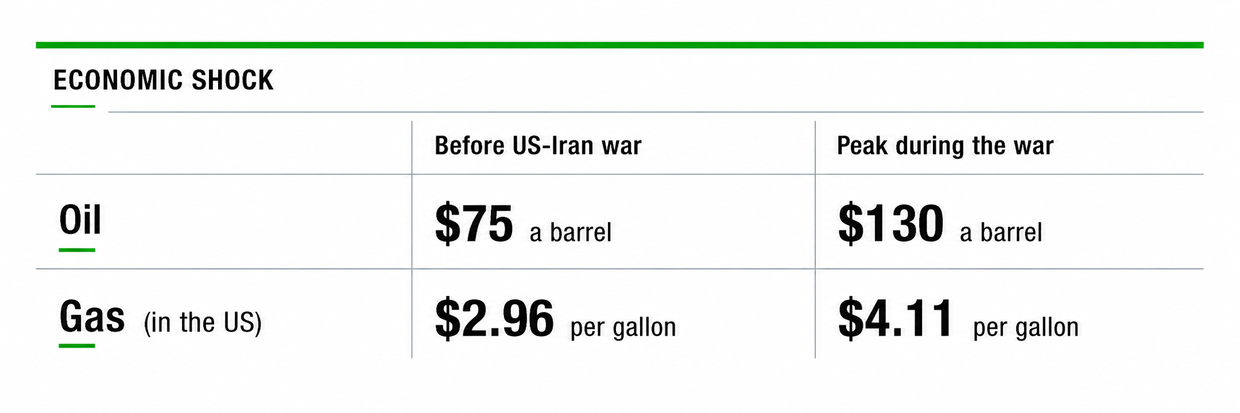
The war also hit consumers far from the battlefield, dealing a heavy blow to the global economy. The effective shutdown of the Strait of Hormuz, a vital shipping lane, sent oil and shipping costs skyrocketing.
READ MORE: No return to pre-war status for Strait of Hormuz – Iran’s top diplomat
Brent crude prices went from $75 a barrel to a peak of $130 a barrel, while in the US, the national average gasoline price reached a peak of $4.11 per gallon, up from $2.96 before the conflict.
What happens next?
The memorandum gives Washington and Tehran 60 days to negotiate a broader settlement. Iran is expected to reopen shipping routes and make nuclear-related concessions under international supervision, while the US has offered sanctions relief and economic incentives.
The deal remains fragile. Trump has warned that the US could resume strikes if Iran fails to comply, while critics say the war ended with many of Washington’s original objectives still unfulfilled.
About the Author


