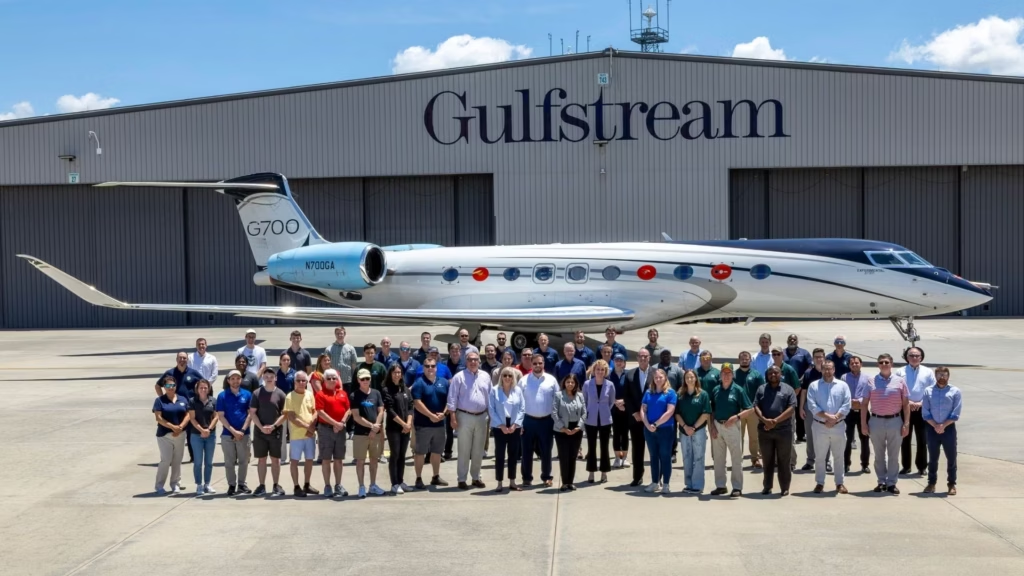
Gulfstream Aerospace has completed an extensive series of flight tests, evaluating the impact of sustainable aviation fuel (SAF) on emissions and contrail formation. According to the manufacturer, for the first time, a Gulfstream G700 aircraft powered by Rolls-Royce Pearl 700 engines flew exclusively on 100% SAF — without any blending with traditional aviation kerosene.
The tests were conducted at altitudes of up to 15.2 km, where modern business jets typically operate. A specially modified Gulfstream G700, converted into a flying laboratory, served as the research aircraft. It flew alongside a G800, using scientific equipment to analyze exhaust composition, particulate matter levels, and the conditions under which contrails form.
The study involved specialists from NASA, the U.S. Federal Aviation Administration (FAA), the German Aerospace Center (DLR), Rolls-Royce, Missouri University of Science and Technology, Aerodyne Research, Montana Renewables, and World Fuel Services.
Scientists compared the effects of three fuel types:
- Standard aviation fuel;
- Low-sulfur fuel;
- Sustainable HEFA SAF, produced from recycled vegetable oils and fats.
The key difference with SAF is the absence of sulfur and aromatic compounds, which are present in conventional kerosene and influence the formation of solid particles in exhaust. Preliminary data from Gulfstream suggests that using 100% SAF significantly reduced the quantity of such particles.
To carry out the experiment, Gulfstream outfitted the G700 cabin to accommodate measurement equipment, and pilots underwent special training to fly at close distances from one another. This allowed researchers to gather data directly from the exhaust zone and observe how the contrail behind the aircraft evolved.
All collected data will be shared with scientific organizations and aviation regulators. It is expected to help improve climate models, establish requirements for sustainable aviation fuel, and develop new strategies to reduce aviation’s environmental impact.
About the Author