Analysts Identify $82,000 As Key Support Level For Bitcoin (BTC)
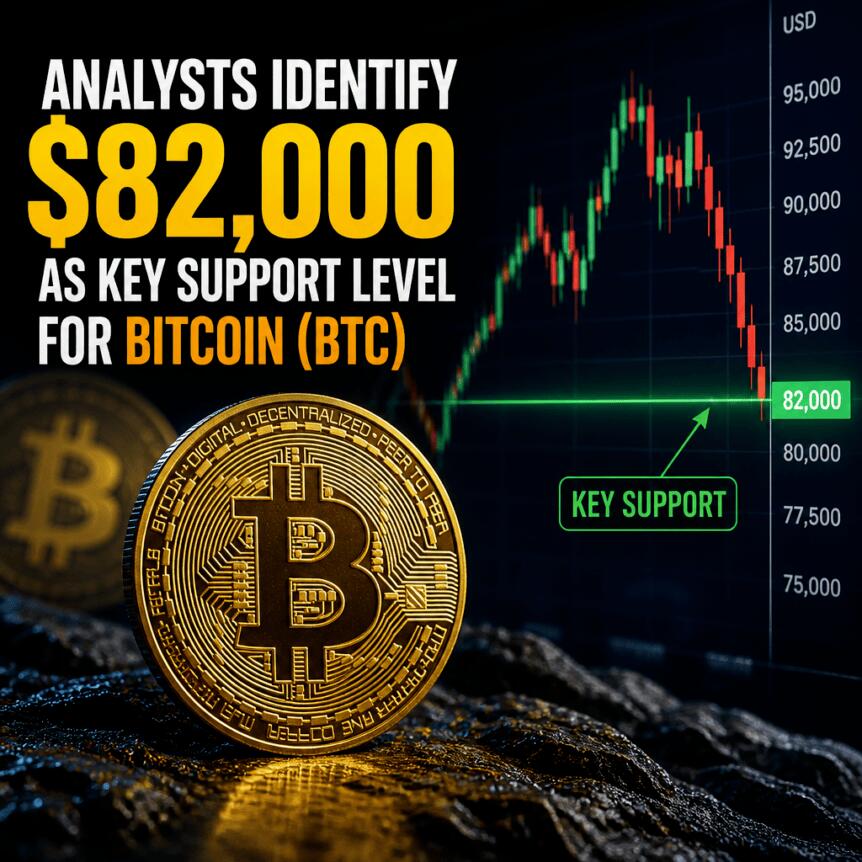 Analysts say $82,000 is a key Bitcoin support level, with potential downside toward $80,000 if it breaks, while ETF flows and macro data shape expectations for October.
Jeff Ko, chief analyst at ViaBTC, and Lacie Zhang, Bitget Wallet research lead, have identified $82,000 as a key support level as Bitcoin (BTC) enters October. The flagship cryptocurrency fell to a low of $82,911 on Wednesday but shrugged off the decline, rebounding to reclaim $85,000.
BTC is currently trading around $86,000, up just over 2% in the past 24 hours.
$82,000 Key for Bitcoin (BTC)
Ko explained the reasoning behind identifying $82,000 as a key level, stating that liquidation clusters were thinner below it, and a drop below it could accelerate a decline towards $80,000. CoinGlass data shows a concentration of leveraged positions around $82,300 and $82,600, and another near $85,400 and $85,700.
Zhang, on the other hand, said BTC must hold $82,000 to prevent a breakdown towards $80,000, and reclaim $87,500 before any move past $90,000 becomes a reality. According to Zhang, a break above $87,500 would likely result in a short squeeze, while a drop below $80,000 could invalidate the bullish setup. Zhang also warned that just because October has historically been bullish for BTC, traders must not assume gains.
“October has a strong historical track record for Bitcoin, but seasonality alone is not an investment thesis.”
Zhang believes robust ETF inflows, corporate treasury purchases, and falling exchange balances support a bullish narrative. However, high oil prices, interest rates, and inflationary pressures remain key obstacles.
ETF Inflows Don’t Guarantee a Rally
Spot Bitcoin ETFs recorded inflows of $2.4 billion last week. However, inflows plummeted to $31 million on Monday (September 28), while Strategy announced a 1,665 BTC purchase, taking its total holdings to 847,666 BTC. Zhang stated that while institutional demand could provide a floor, it cannot guarantee a rally on its own, and needs other factors to come into play.
“Institutional demand can provide a floor, but it cannot guarantee an October rally on its own.”
Ko also cited last week’s inflows into BTC and $644 million into Ethereum (ETH). The analyst called BTC’s inflow figures constructive, despite BTC failing to retain its post-PCE gains. The flagship cryptocurrency rose to $85,600 following softer-than-expected PCE data before declining. Wojciech Kaszycki, BTCS S.A. strategy advisor, added that the initial rally was supported by cash purchases before leveraged positions came into play. Kaszyski believes ETF inflows and corporate over-the-counter purchases are key to a move towards $90,000.
However, he warned of selling by holders who bought BTC between $90,000 and $110,000 as the asset closes in on or moves above their purchase prices.
October Rate Hike Odds Drop
The US Bureau of Economic Analysis’s PCE data came in cooler than expected. Headline PCE rose 0.3% month over month and 3.4% year over year. Meanwhile, core PCE rose 0.2% month over month and 3% annually, with both annual readings below expectations of 3.7% and 3.3%. However, Ko attributed this to methodology-driven revisions rather than easing price pressures. According to CME FedWatch, the probability of a rate hike in October has fallen from 64% a week ago to 26%, and the probability of them remaining unchanged is currently 74%.
On the other hand, Zhang believes the Fed will hike interest rates by 25 basis points, taking the target range to 4%-4.25%, highlighting energy prices and inflation as key factors. HashKey Group senior researcher Tim Sun has warned that investors could consider September’s interest rate hike as the start of a tightening cycle if rates are hiked again after the October meeting.
Disclaimer: This article is provided for informational purposes only. It is not offered or intended to be used as legal, tax, investment, financial, or other advice.
This article was originally published as Analysts Identify $82,000 As Key Support Level For Bitcoin (BTC) on Crypto Breaking News – your trusted source for crypto news, Bitcoin news, and blockchain updates.
About the Author


