Stablecoin Supply Drops $14.2B in Largest 30-Day Decline Since June 2022
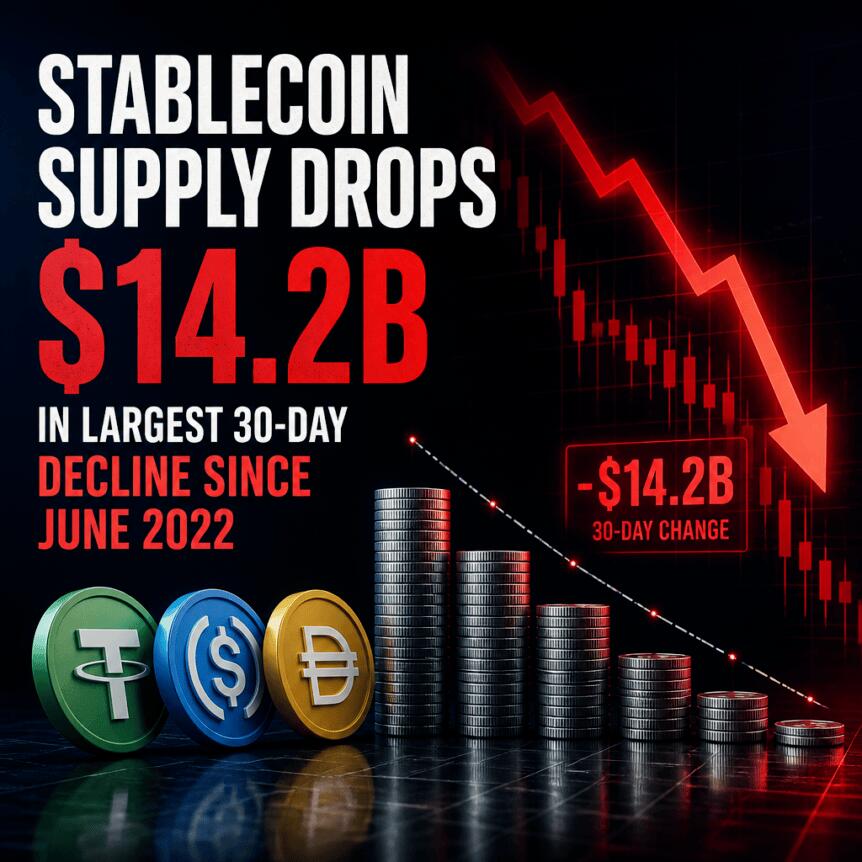 Stablecoins are pulling back again, with total supply shrinking by $14.2 billion over the past 30 days—the largest 30-day contraction since June 2022, according to Glassnode. At the same time, broader demand signals for Bitcoin remain muted. The Coinbase Premium Index—which compares Bitcoin pricing on Coinbase versus Binance—has stayed negative after reaching its lowest level [...]

Stablecoins are pulling back again, with total supply shrinking by $14.2 billion over the past 30 days—the largest 30-day contraction since June 2022, according to Glassnode.
At the same time, broader demand signals for Bitcoin remain muted. The Coinbase Premium Index—which compares Bitcoin pricing on Coinbase versus Binance—has stayed negative after reaching its lowest level in about four years toward the end of October, suggesting persistent weakness in relative demand for US-based trading venues.
Key takeaways
Stablecoin supply fell $14.2 billion in 30 days, the steepest drawdown since June 2022, per Glassnode.
USDT is trading slightly below its $1 peg, which Glassnode links to continued outflows from the stablecoin market.
Coinbase Premium remains negative after dropping to its weakest level since November 2022, according to CryptoQuant.
Crypto demand indicators are soft as Bitcoin trades near recent multi-week lows, reinforcing the broader “risk-off” feel.
Stablecoin supply contracts at its fastest pace since mid-2022
Glassnode reports that the rolling 30-day change in stablecoin supply reached a $14.2 billion decline this week, surpassing the $9.5 billion drop seen during a prior period when Bitcoin traded below $58,000 on July 1. More importantly, the current contraction is the largest since June 2022, when stablecoin supply fell by nearly $30 billion.
For markets, stablecoin liquidity often acts as a “fuel gauge.” When supply declines, it typically means holders are redeeming stablecoins for fiat and moving value out of crypto-native trading accounts—an environment that can reduce the readily available cash for dips, leverage, and faster rotation into risk assets.
Glassnode frames the mechanism directly: “A shrinking supply means holders are redeeming stablecoins for dollars and taking that cash out of the market, which leaves less fuel for a rally.”
USDT trades fractionally under $1 as redemption pressure persists
Despite USDT’s status as the largest stablecoin by market capitalization, it is still trading slightly below its intended $1 peg. Glassnode attributes that pattern to what it describes as “the same pressure” from investors rotating away from stablecoins.
In other words, the stablecoin contraction and the peg deviation appear to be moving together: if demand to hold stablecoins softens and redemptions increase, prices can drift modestly as liquidity thickens less around the peg.
Glassnode also flagged an important condition to watch: “Should the 30-day change turn back to growth, it would be the first sign that new money is coming in.” That makes the next reading of stablecoin supply a practical checkpoint for traders and fund managers—whether liquidity is continuing to drain or stabilizing.
Coinbase Premium stays negative after four-year lows
Beyond stablecoins, onchain-derived market structure continues to point to weaker relative demand. CryptoQuant reported that overall Bitcoin demand has been declining, stating that it fell by 284,000 BTC over 30 days—the most pronounced downturn since March 2025.
One of the most closely followed indicators in that context is the Coinbase Premium Index, which tracks the spread between Coinbase’s BTC/USD price and Binance’s BTC/USDT price. On Wednesday, the index remained negative.
CryptoQuant’s data show the index reached -0.27% on Oct. 29, its lowest level since November 2022—a level that was notable enough for CryptoQuant analyst Amr Taha to comment on at the time. In his write-up, he said the discount implies “weaker relative demand or greater selling pressure on Coinbase, a major venue for US-based trading activity.”
When the Coinbase Premium remains suppressed, it typically suggests that buyers are not consistently paying up on the Coinbase side relative to Binance, which can reflect reduced appetite from certain segments of the market, differences in order flow, or heightened sell pressure on that venue.
What investors should watch next
The combination of a rapidly shrinking stablecoin base and a persistently negative Coinbase Premium creates a clear “liquidity and demand” narrative: less stablecoin liquidity can mean fewer resources for risk-taking, while the Coinbase spread points to continued softness in relative demand. The next key signals are whether stablecoin supply’s 30-day trend reverts toward growth and whether Coinbase Premium begins to stabilize or recover off its recent lows—both of which would indicate that liquidity is returning and relative buying pressure is improving.
This article was originally published as Stablecoin Supply Drops $14.2B in Largest 30-Day Decline Since June 2022 on Crypto Breaking News – your trusted source for crypto news, Bitcoin news, and blockchain updates.
About the Author


