The recent Artemis II mission achieved numerous milestones, but one particular record stands out as somewhat less obvious: on April 6th, the astronauts aboard the Orion spacecraft and the crew inhabiting China’s Tiangong orbital station briefly found themselves farther apart from each other than any human beings had ever been before.
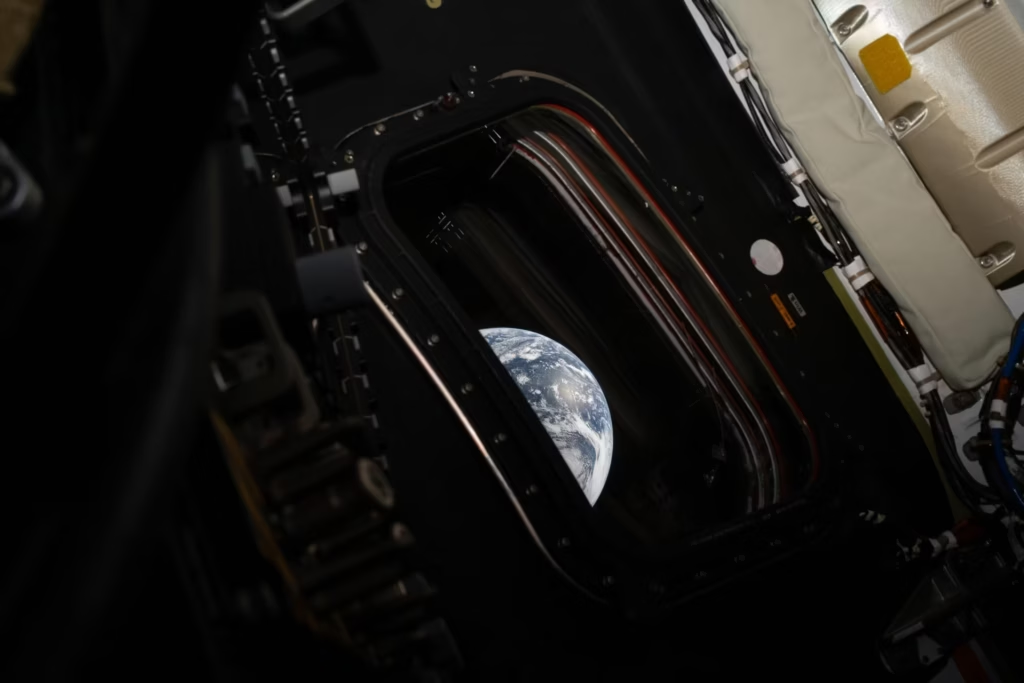
A view of Earth from the Orion spacecraft. Photo: NASA.
These calculations were performed by astrophysicist Jonathan McDowell. According to his figures, as Artemis II rounded the far side of the Moon, the capsule separated from Tiangong by a distance of 419,643 kilometers. For perspective, the largest separation between Orion and the ISS was 419,581 kilometers. This means that the taikonauts on Tiangong represented the most distant humans from Artemis II at that specific juncture.
NASA had previously confirmed that Artemis II surpassed the all-time record for human distance from Earth, a record previously held by the Apollo 13 mission back in 1970. Now, it has emerged that this flight possesses another historical significance: it marked the apex of human dispersal across near-Earth and lunar space.
McDowell suggested that this particular record might be significant less for its inherent value and more as an emblem of a future wherein humanity is not merely the “farthest from Earth” but is instead distributed throughout the Solar System.
About the Author